Bowes Railway

The world's only preserved operational standard gauge cable railway system.
Region:
Red Wheel Site:
Transport Mode(s):
Address:
Bowes Railway, Springwell Village, Gateshead, Tyne and Wear, NE9 7QJ
Postcode:
Visitor Centre:
Opening Times:
Weekdays and Saturdays- visit website, email alexspiller@hotmail.com or telephone 0191 4161847 .
Website:
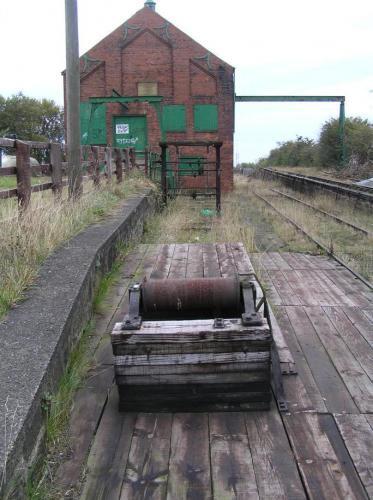
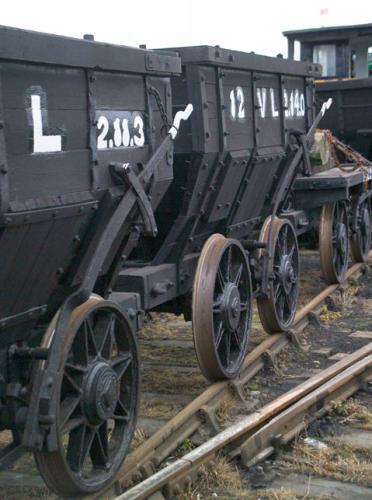
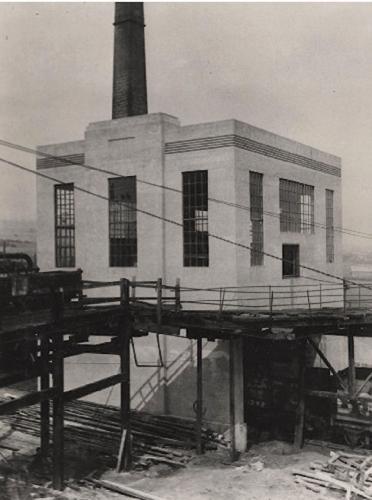
Visit websiteBowes Railway was originally a colliery railway built to carry coal mainly from pits in north west Durham to the Tyne at Jarrow. The earliest section was designed by George Stephenson and opened on 17 January 1826, making it one of the world's first modern railways.
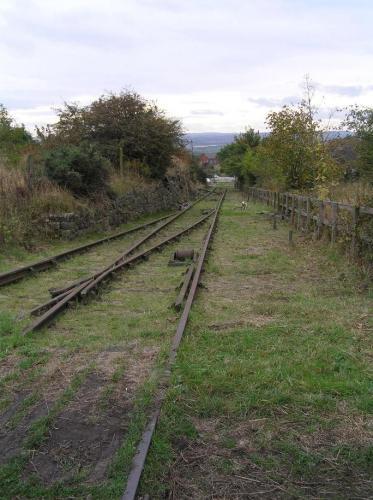
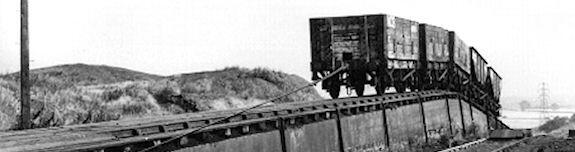
It was 15 miles long when completed in 1855. Each end was locomotive worked; the six mile middle section consisting of rope worked inclines with very steep gradients. At its peak, the Railway handled over 1 million tons of coal per year and remained virtually intact until 1968.
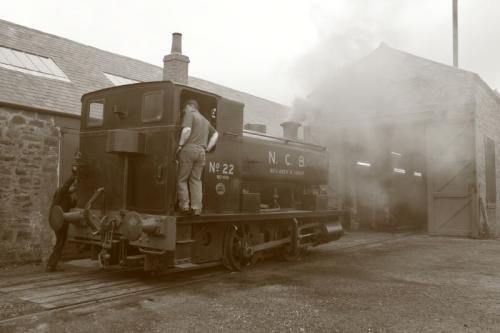
Between 1968 and 1974, most of the line was closed until only the last 3.5 miles between Monkton and Jarrow staithes were operated by the National Coal Board. However, the original 1826 section between the Black Fell bank head and Springwell bank head was acquired for preservation in 1976 by Tyne and Wear County Council. This comprises Blackham's Hill West and East inclines, which are operated by a stationary haulage engine.
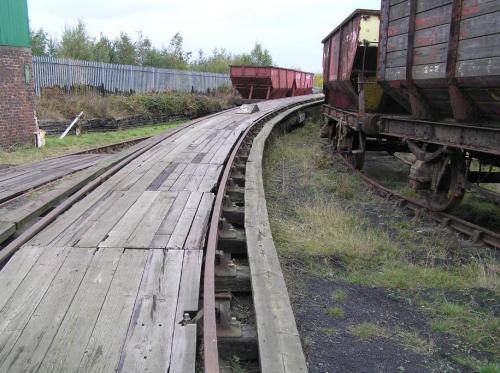
It is the world's only working preserved standard gauge rope hauled railway. In 1977, the Railway's Engineering and Wagon Shops at Springwell were added to the scheme, providing the facilities needed for maintenance.
The whole railway, including the buildings, machinery and rolling stock is now a Scheduled Ancient Monument and is managed by the Bowes Railway Company Ltd on behalf of the current joint owners, Sunderland City Council and Gateshead Council.
By road: From the south - from the A1(M) north past Washington Services follow the divide to the right towards the Tyne Tunnel. Take the first exit from the first interchange, then turn right onto the B1288. Follow the Bowes Railway signs through the village. From the north and west, head for the Eighton Lodge interchange (Gateshead Angel) from the southbound A1, and take the first slip road off to the left immediately after the Bowes Incline Hotel (set back on the left side) after the interchange. Drive across Mill House roundabout and take the first left into Springwell Village.
By bus: Springwell village is served by buses from Newcastle, Gateshead, Washington and Sunderland.
By train: The nearest mainline railway stations are Newcastle Central Station, Heworth, Sunderland, Durham and Chester-le-Street.
Biddle, Gordon, Britain's Historic Railway Buildings, Oxford University Press, ISBN-10: 0198662475 (2003)
Biddle, Gordon & Nock, O.S., The Railway Heritage of Britain : 150 years of railway architecture and engineering, Studio Editions, ISBN-10: 1851705953 (1990)
Biddle, Gordon and Simmons, J., The Oxford Companion to British Railway History, Oxford, ISBN 0 19 211697 5 (1997)
Bonavia, Michael, Historic Railway Sites in Britain, Hale, ISBN 0 7090 3156 4 (1987)
Conolly, W. Philip, British Railways Pre-Grouping Atlas And Gazetteer, Ian Allan Publishing, ISBN 0-7110-0320-3 (1958/97)
Jowett, Alan, Jowett's Railway Atlas of Great Britain and Ireland, Patrick Stephens Ltd. ISBN 1-8526-0086-1. (March 1989)
Morgan, Bryan, Railways: Civil Engineering, Arrow, ISBN 0 09 908180 6 (1973)
Morgan, Bryan, Railway Relics, Ian Allan, ISBN 0 7110 0092 1 (1969)
Simmons, J., The Railways of Britain, Macmillan, ISBN 0 333 40766 0 (1961-86)
Simmons, J. The Victorian Railway, Thames & Hudson, ISBN 0 500 25110X (1991)
Smith, Martin, British Railway Bridges and Viaducts, Ian Allan, ISBN 0 7110 2273 9 (1994)
Turnock, David, An Historical Geography of Railways, Ashgate, ISBN 1 85928 450 7 (1998)