Dochart Viaduct, Killin

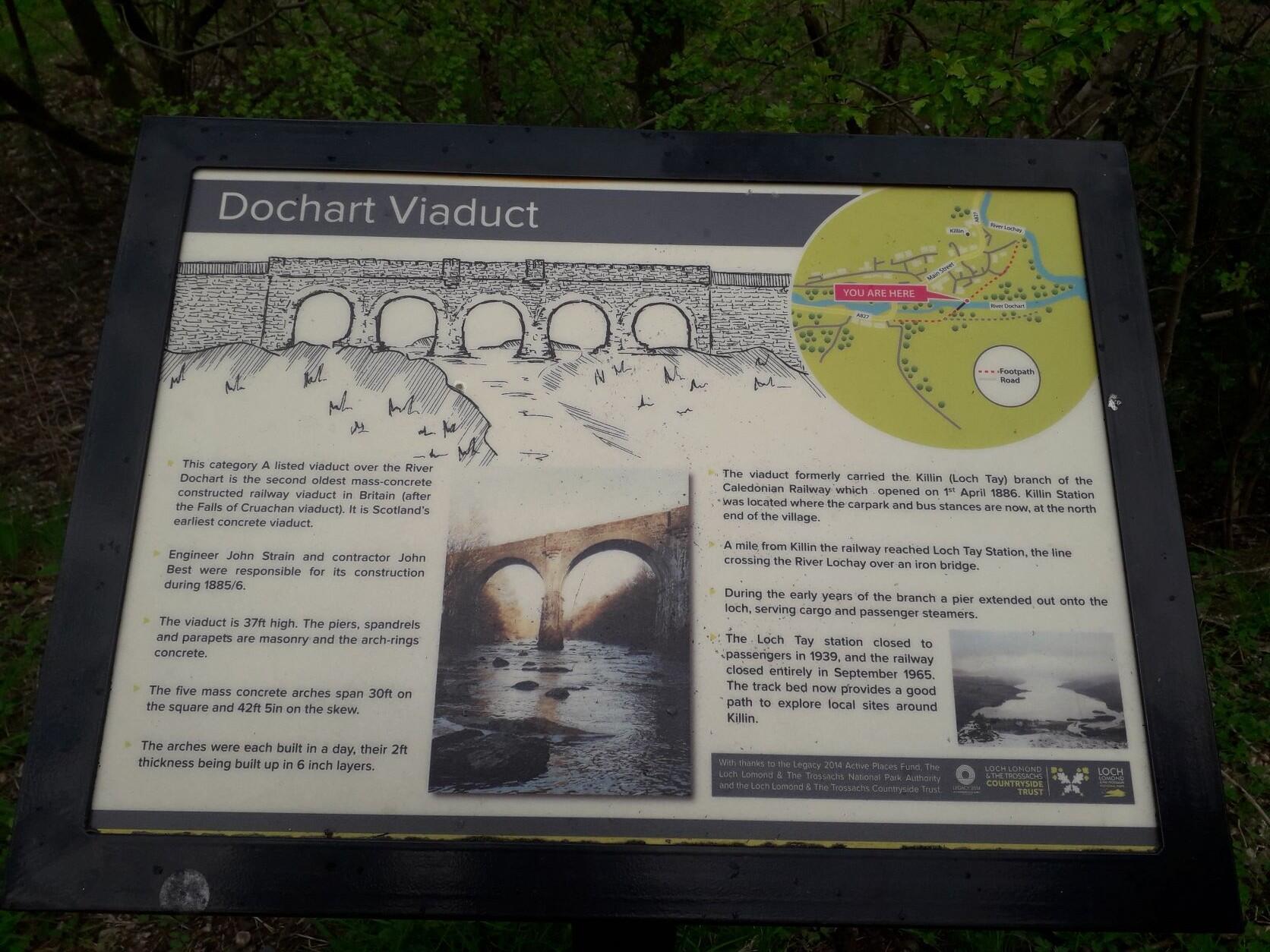
Grade A-listed viaduct over the River Dochart is the second-oldest mass-concrete railway viaduct in Britain after that at Falls of Cruachan
Region:
Red Wheel Site:
Transport Mode(s):
Address:
Ballechroisk Court
Postcode:
Visitor Centre:
Website:
Visit websiteThe viaduct is 37 ft high on a 45-degree skew. Piers, spandrels and parapets are masonry, and the arch-rings are concrete. The five arches span 30 ft on the square and 42 ft 5 in on the skew. The arches were each built in a day, their 2 ft thickness being built up in 6-in layers. Engineer was John Strain, and contractor John Best was responsible for construction in 1885/6 after failure of the first contractor, the untried Macdonald of Skye who had submitted the lowest tender. There was a surprisingly grand opening ceremony on 13 March 1886.
The entire Killin Branch railway was built on a falling gradient of 1: 50 between Killin Junction on the Callander and Oban Mainline and Killin Station. This gradient included the mass concrete constructed Dochart Viaduct which was built on a constant falling gradient.
The single-track 5 and 1/4-mile railway that crossed the Viaduct was a locally-promoted branch line from Killin Junction on the Callander & Oban Railway down to the village of Killin and a terminus at a pier on Loch Tay whence there were cargo and passenger steamers sailing along the Loch to Kenmore. Instigation was by the Marquess of Breadalbane after he had failed to get the C&O to provide a link to the steamers : both the C&O and the Caledonian cooperated, with rails provided in exchange for shares, but a good deal of local money was needed as well. Opening was on 1 April 1886, the original Killin station at Glenoglehead becoming reduced to a private halt for railway servants three years later, and the company remained nominally independent of the Caledonian Railway until 1923, when the directors of this two-man railway with impressive debts and no money accepted the LMS’s improved offer of £8 for each £100 of Killin stock with the hope that they might get free passes.
The branch service was cut back in 1939 to Killin, where the locomotive attached itself to the other end of its single carriage by gravity shunting. Caledonian 0-4-4 tank locomotives gave way in the final years to BR Standard Class 4 2-6-4 tanks, often 80092 or 80093. Main traffic was a schools train which ran through to and from Callander. Operations abruptly ceased on the day after a rockfall at Glen Ogle on 27 September 1965, six weeks before final closure was due to take place.
The track-bed now provides a good path to explore local sites around Killin.
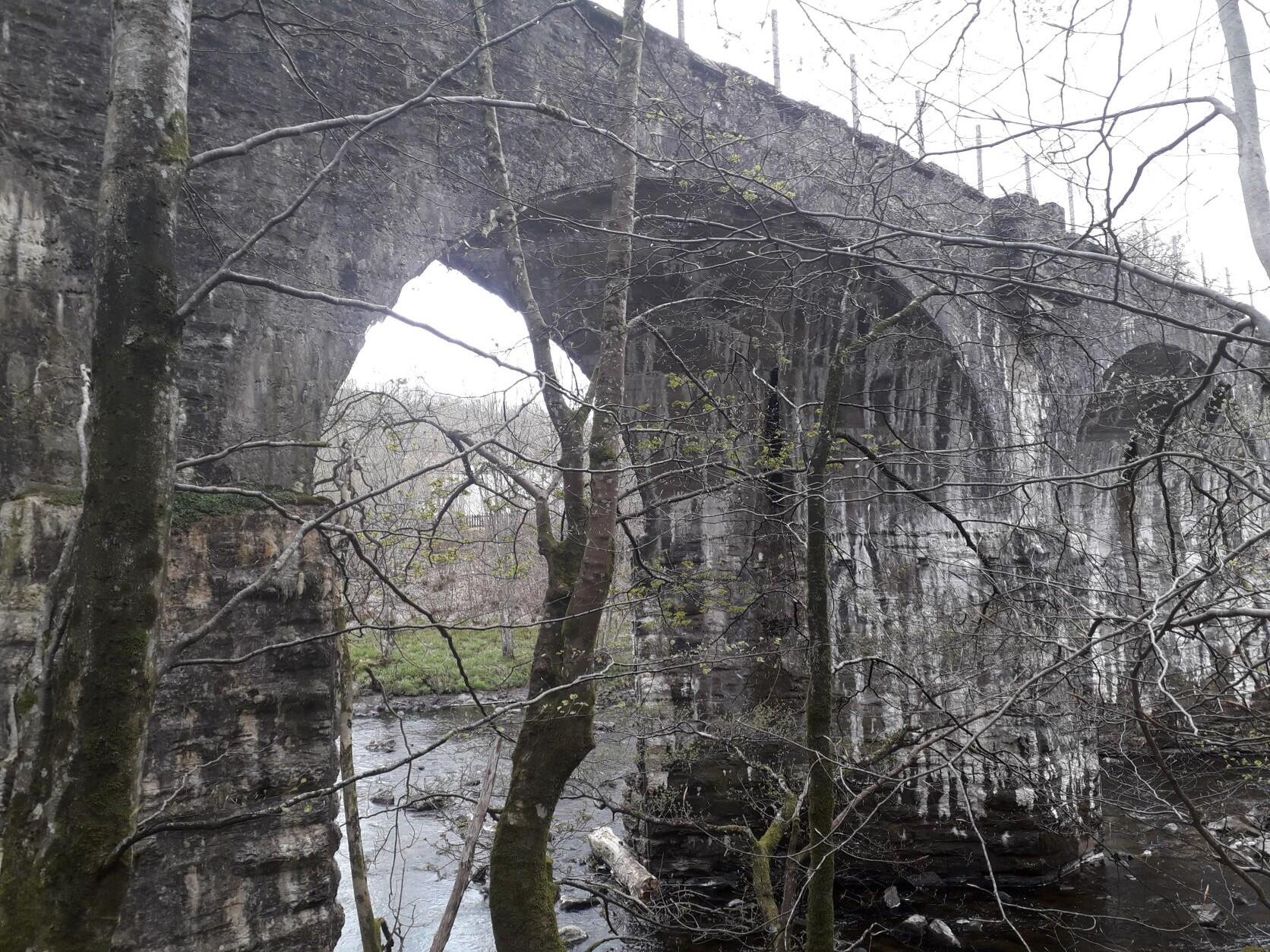
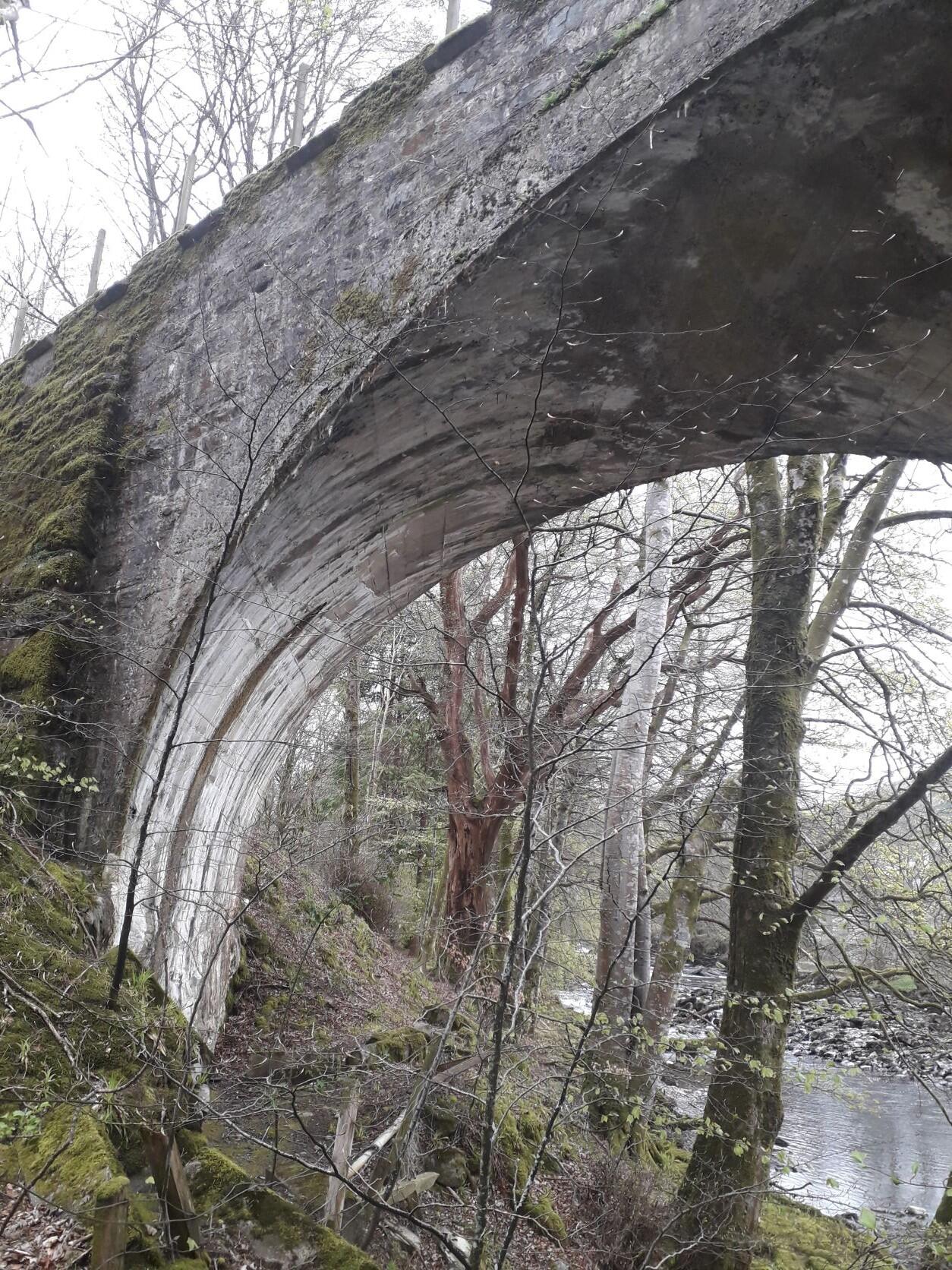
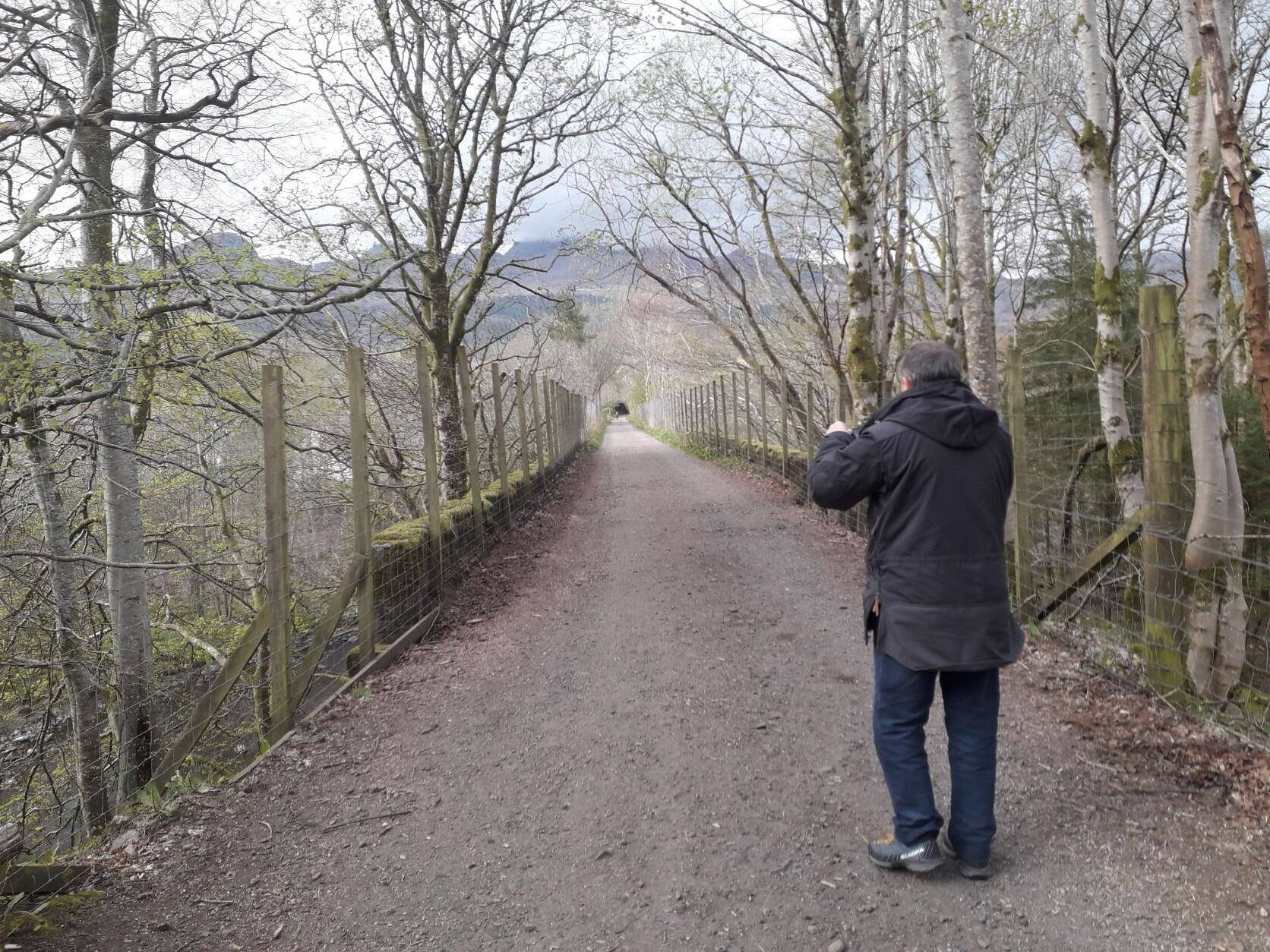
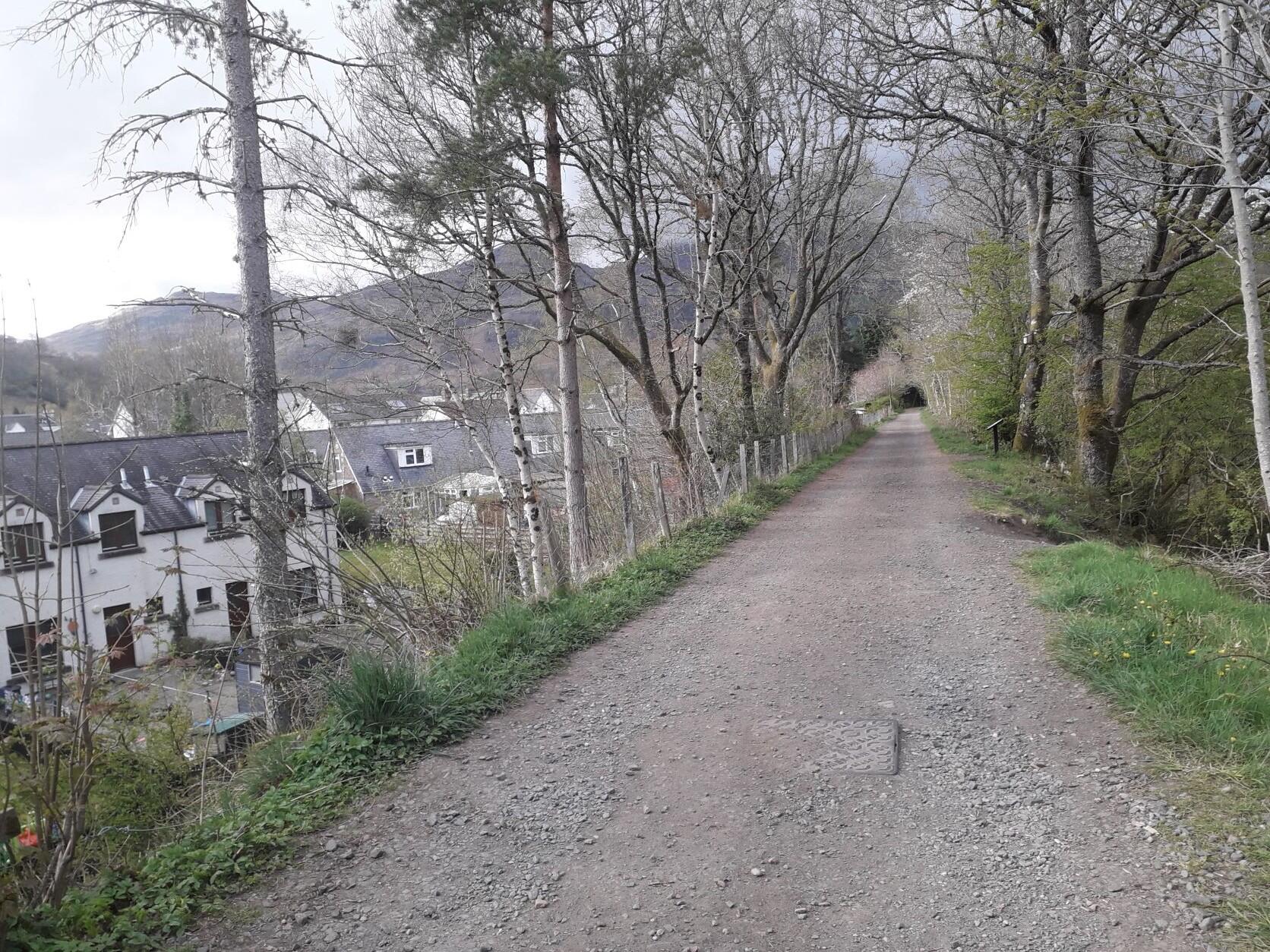
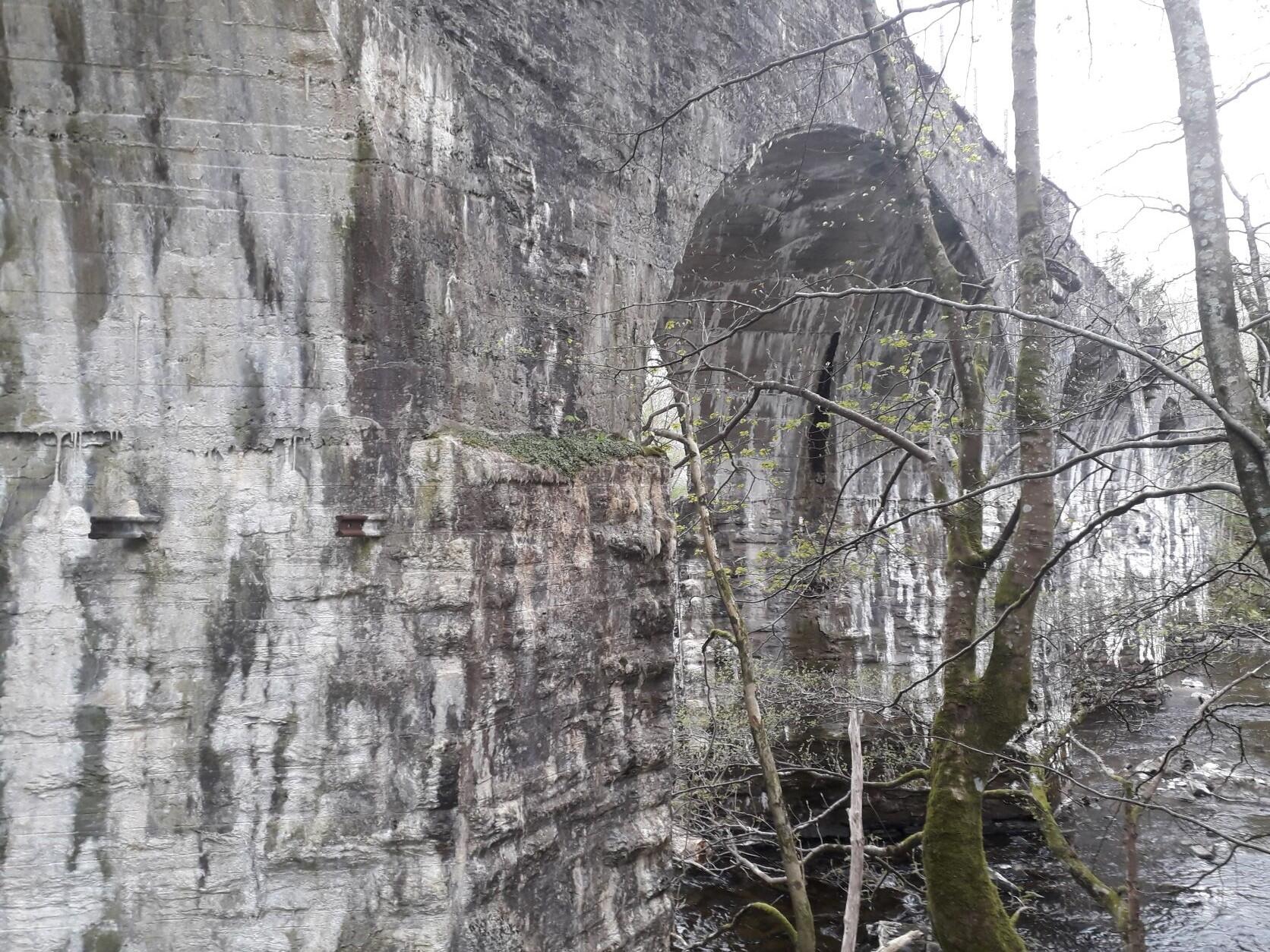
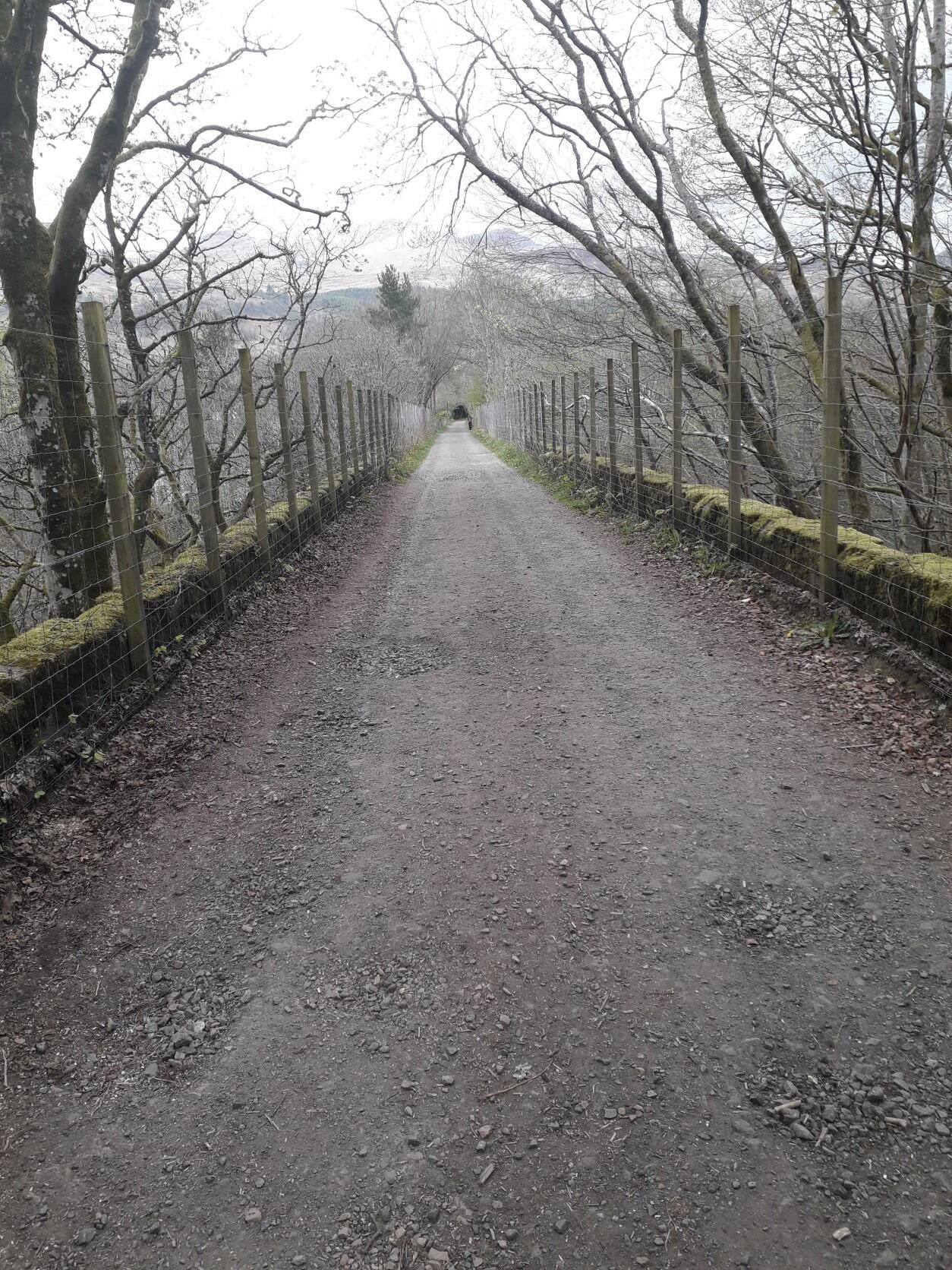
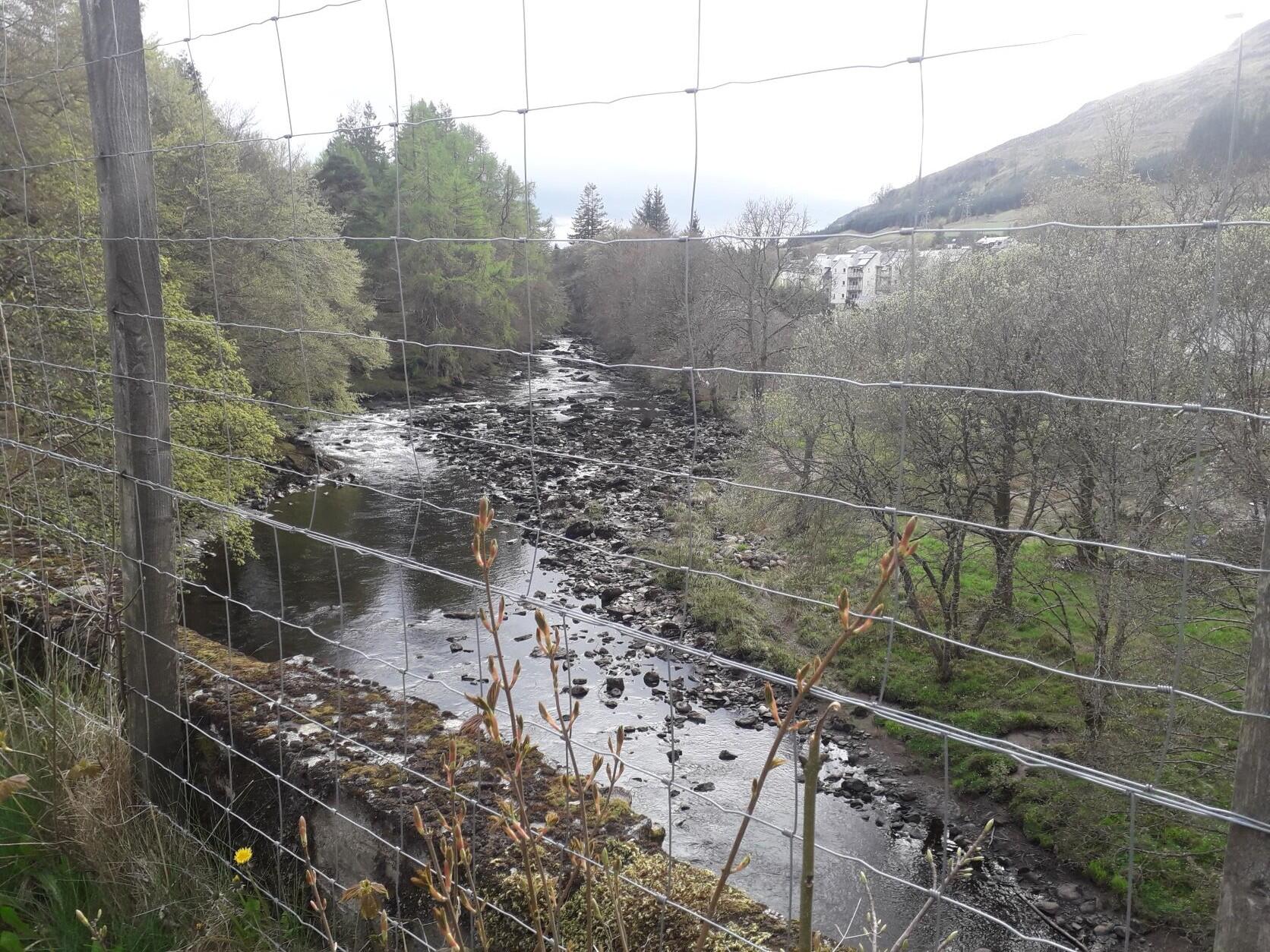
The viaduct crosses the river east of Main Street, near the Clan Macnab Burial Ground.
Nearest railways station is Crianlarich