Finnieston Crane, Glasgow


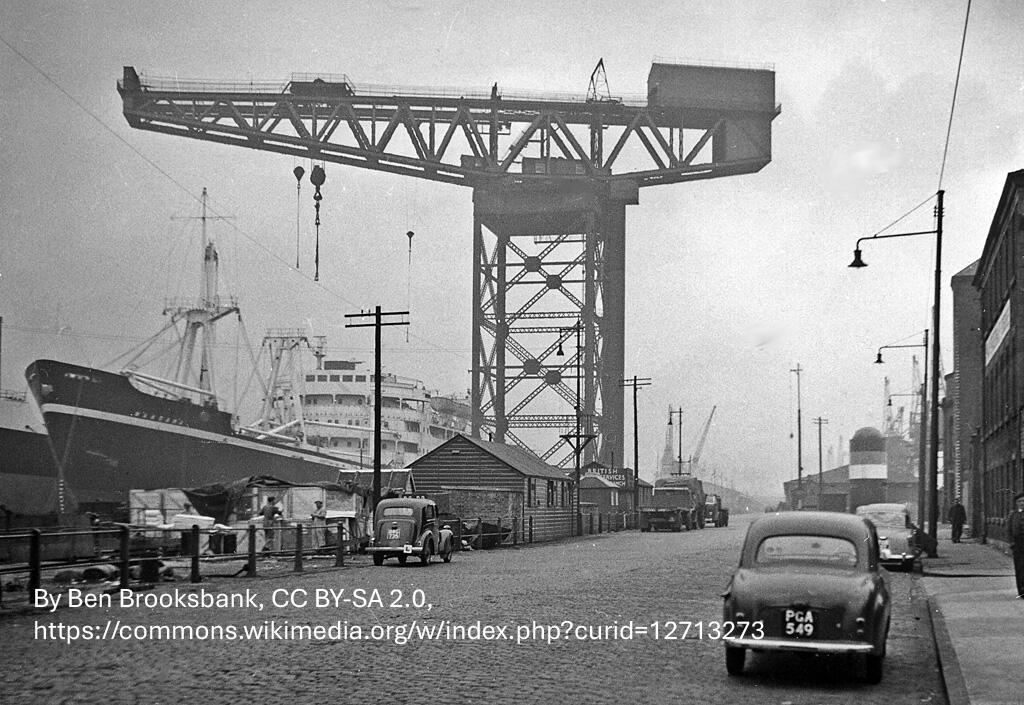
A giant city-centre crane formerly used to hoist Glasgow-built locomotives being exported to the railways of the British Empire. The Finnieston Crane is the international symbol of Glasgow : a representation of the City's proud maritime and industrial heritage.
Region:
Red Wheel Site:
Transport Mode(s):
Address:
Finnieston Quay
Glasgow
Postcode:
Visitor Centre:
Website:
Visit websiteCommissioned in June 1928 by the Clyde Navigation Trust, the operators of the port and dock facilities in Glasgow, The tower was built by Cowans, Sheldon & Company of Carlisle and the cantilever by the Cleveland Bridge & Engineering Company, under the supervision of Daniel Fife, mechanical engineer to the Clyde Navigation Trust. Completed in 1931 and commenced operation in 1932.
History : one of four such cranes on the River Clyde, a fifth one having been demolished in 2007, and one of only eleven giant cantilever cranes remaining worldwide. The crane can be seen in the background of news broadcasts from BBC Pacific Quay.
Queens Dock was opened in August 1877 as a 61-acre (25 ha) dock for exporting goods from the centre of Glasgow. A 130-tonne (130-long-ton; 140-short-ton) steam crane was constructed west of the current one in the 1890s, until it was demolished to make way for a proposed bridge crossing between Finnieston Quay and Mavisbank Quay that was never built. The present crane, constructed as a replacement, was the last giant cantilever crane to be built on the Clyde. The total cost of the crane and foundations was £69,000, 85% of which was met by the Trust. It is properly known as the "Stobcross Crane" or "Clyde Navigation Trustees crane", but its proximity to Finnieston Quay, and the fact that it was intended to replace the previous Finnieston Crane, has led to its being popularly known as the Finnieston Crane.
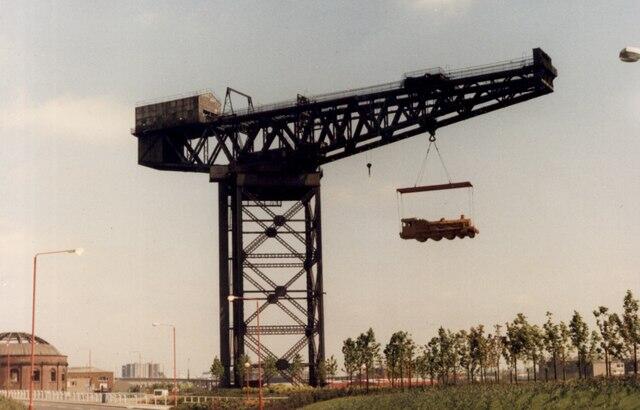
The Finnieston Crane is a giant cantilever crane, 53 metres (175 ft) tall with a 46-metre (152 ft) cantilever jib. It has a lifting capacity of 175 tons, and could perform a full rotation in three and a half minutes. It can be ascended either by a steel staircase or an electric lift, the only example of such a personnel lift in Britain. It is also the only crane fitted with a horizontal rail to permit movement of the jigger hoist, an auxiliary crane intended to handle lighter loads.
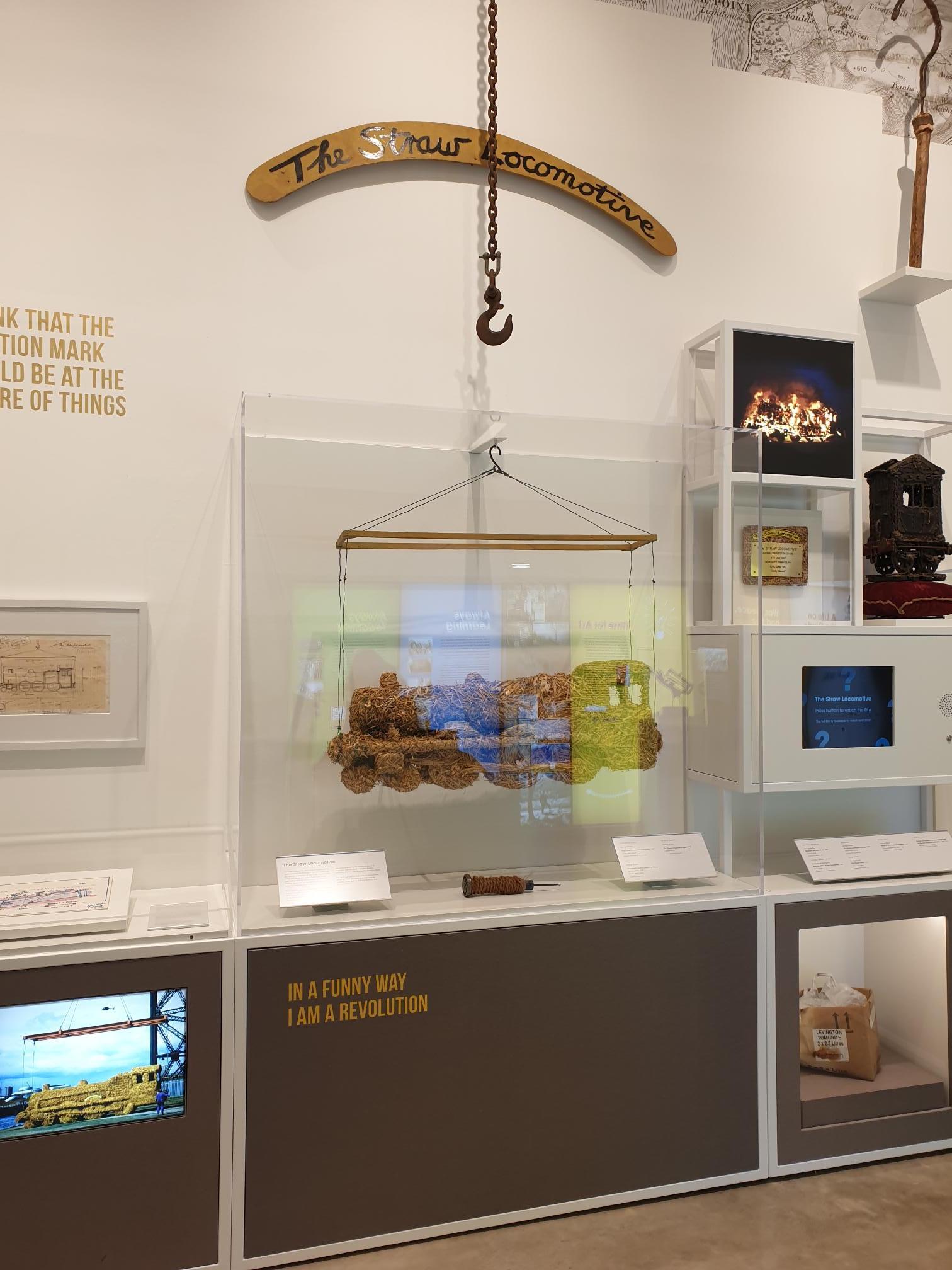
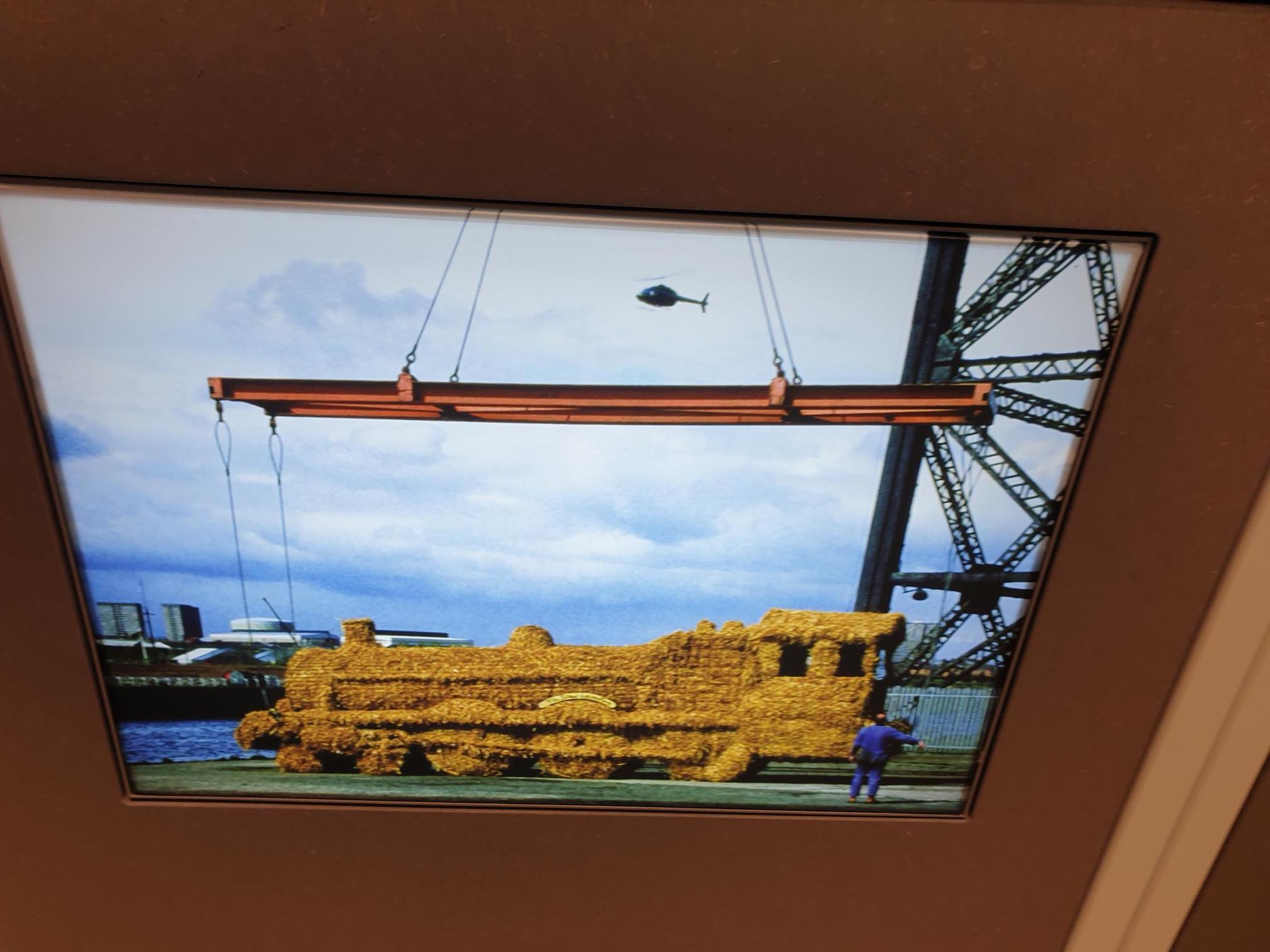
Disused since 1969, however in the summer of 1987, a full-size replica locomotive made from straw by local sculptor George Wyllie was hauled from the old Hyde Park Works in Springburn and suspended from the crane, then hauled back to Springburn and burned to reveal the metal framework underneath.
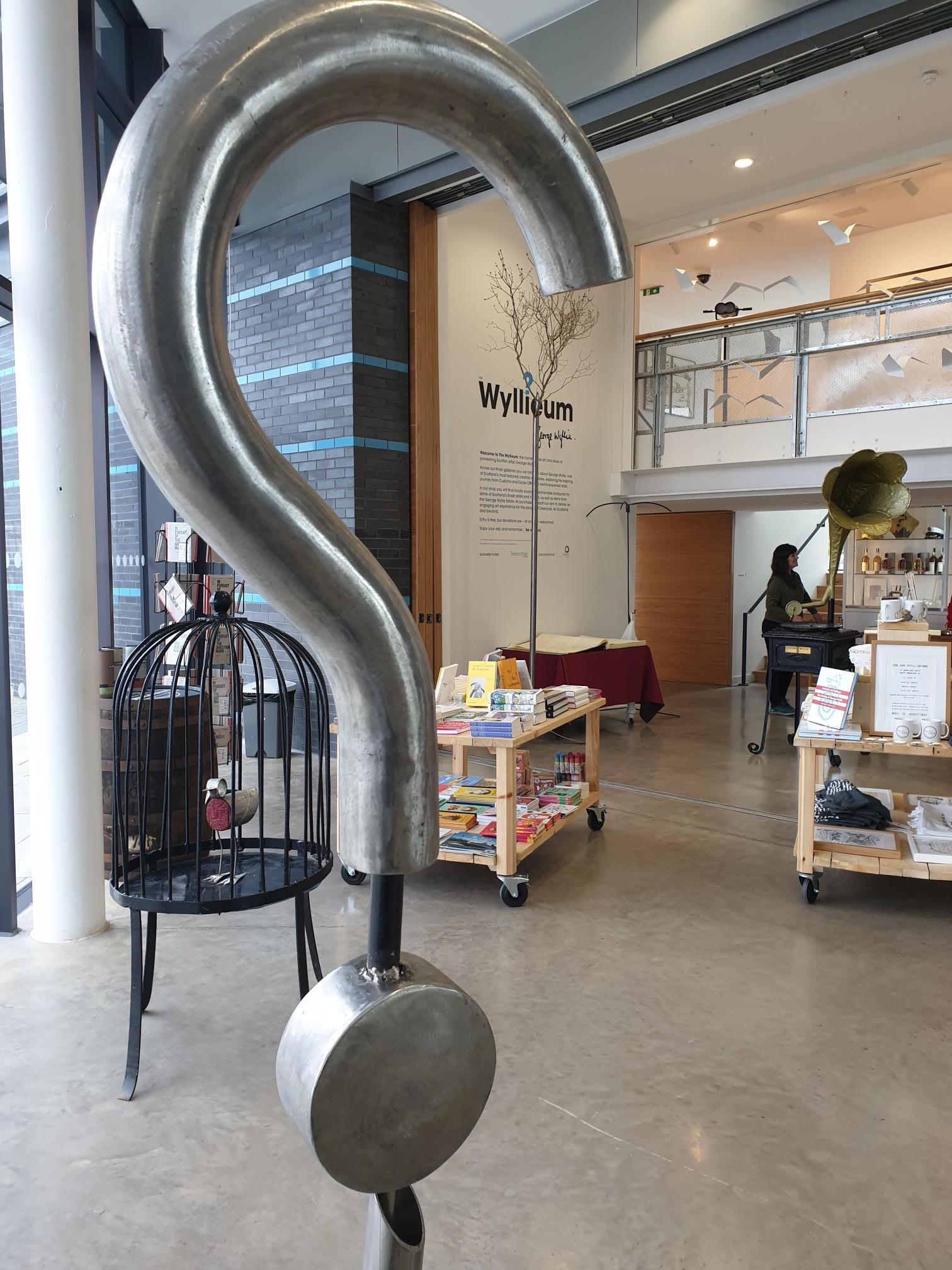
After Wyllie's death in May 2012, a giant question mark was suspended from the crane in an acknowledgement of his work. In 2013, microphones were attached to the crane by American artist Bill Fontana, to record the sounds made by the structure.
In 2020 the Big Cran Company CIC has been established to preserve the Finnieston Crane for future generations and realise its potential as a community asset.
On the north bank of the Clyde, near the Radisson Red Hotel and the Clyde Arc (“Squinty”) Bridge. Nearest railway station is Exhibition Centre.
Finnieston Crane - Wikipedia
Photo By Elliott Simpson, CC BY-SA 2.0, https://commons.wikimedia.org/w/index.php?curid=31958103