Lincolnshire Coast Light Railway

Preserved trench railway system, formerly operated as an agricultural railway in the potato fields of Lincolnshire.
Region:
Red Wheel Site:
Transport Mode(s):
Address:
Postcode:
Visitor Centre:
Opening Times:
Opening times vary. See schedule, visit website or telephone 01754 899400.
Website:
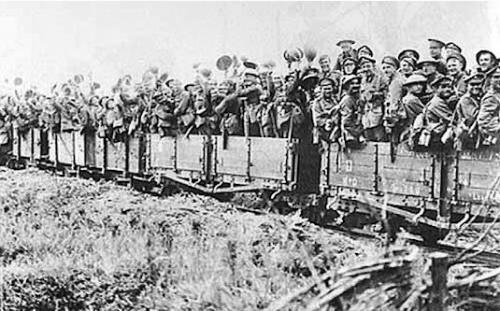
Visit websiteThe railway has origins in the network of narrow gauge railways which served Lincolnshire's vast potato growing industry before the development of modern roads. The largest was the Nocton Estates Light Railway, operating seven miles south of Lincoln. Its track and rolling stock came from the trench railways built by the British military (RE Light Railways companies) in the First World War to take troops and munitions to the front lines. When the Nocton system was made obsolete by more efficient tractors, motor vehicles and improved roads, the rolling stock and other equipment was preserved and adapted for passenger use.
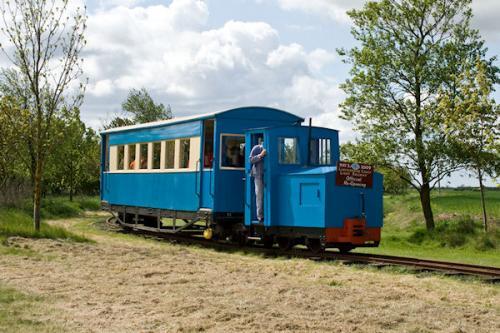
The Lincolnshire Coast Light Railway is a 60 cm (1' 11 5/8") gauge line which hosts a unique and historically important collection of early English narrow gauge railway carriages and wagons, diesel locomotives and one steam locomotive. It is the only true narrow gauge railway on the East Coast of the British Isles. Even the rails are of historic interest, reclaimed from industrial and quarrying sites, where narrow gauge railways had once provided essential transport. The railway also hosts an important collection of WW1 trench railway vehicles which have been restored by the LCLR Historic Vehicles Trust.
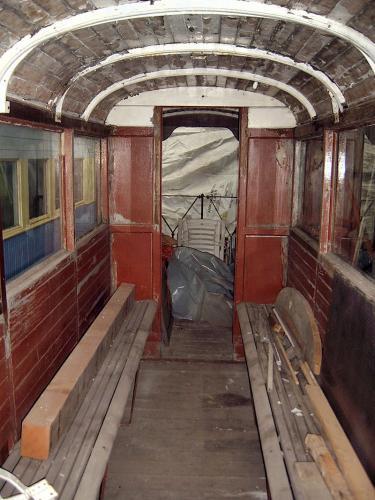
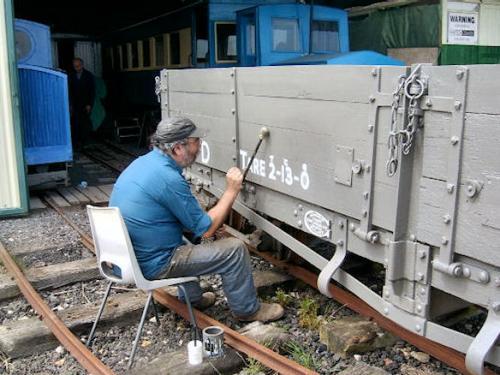
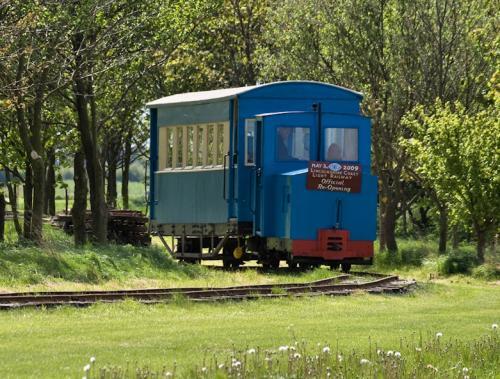
One unique item is the passenger carriage from the Nocton Estates Light Railway, built on the frame of one of the War Department Light Railway's Class 'D' bogie wagons. It had been used for inspections of the estates and to transport shooting parties; after closure of the Nocton system, it was used as an office. In addition, a WDLR Class 'P' four-wheeled ration wagon, once used by the LCLR as an open top passenger vehicle, has also been modified for use on the railway.
The Railway's five diesel locomotives are all Simplexes - locomotive 'Paul', built by Motor Rail of Bedford in 1926 (works number 3995) was a veteran of the Nocton railway. The others are locomotive 'Wilton' (works number 7481, built 1940), locomotive 'Nocton' (works number 1935, built 1920), locomotive 'Major' (works number 8622, built 1944) and an un-named example (works number 8874, also from 1944). An 0-6-0 saddle tank steam locomotive, built in 1903 by Peckett & Sons (works number 1008) for lime works at Southam in Warwickshire, is currently under restoration.
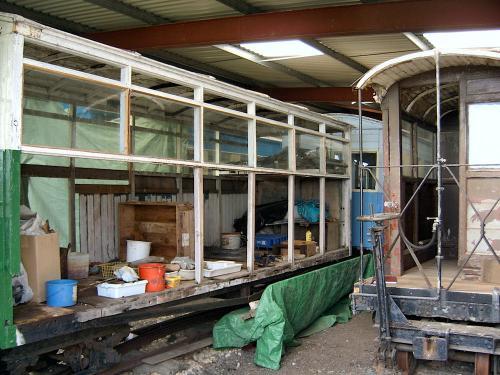
The importance of the four vehicles owned by the LCLR Historic Vehicles Trust has been recognised by the Science Museum and the Transport Trust who have contributed to the cost of their restoration. For many years they were displayed in the Museum of Army Transport. They include the only surviving ambulance van built for the WW1 trench railways, two Class D bogie wagons and a Class P four-wheeled ration wagon.
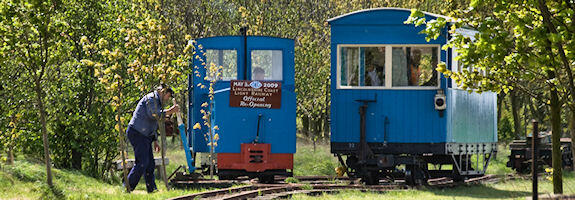
The railway is now based at Skegness Water Leisure Park, three miles north of Skegness. The line re-opened in May 2009 after twelve years of reconstruction by a small group of volunteers. The heritage railway originally operated at Humberston between 1960 to 1985 where it transported holidaymakers from a bus terminus.
By road: Off A52, via Walls Lane.
By rail: Ingoldmells is some 7 km from Skegness Station.
Burton, Anthony & Scott-Morgan, John, Britain's Light Railways, Moorland Publishing, ISBN-10: 0861901460 (1985)
Corser, W. J. L., Wings on Rails: Industrial Railways in the Logistics Support of Britain's Air Defence Forces, Arcturus Press, ISBN 10-907322859 (2003)
Davies, W. J. K., Light Railways of the First World War: History of Tactical Rail Communications on the British Fronts, 1914-18, David & Charles, ISBN-10: 0715341081 (1967)
Davies, W. J. K., The Light Railway Railcars in Western Europe, Plateway Press, ISBN-10: 1871980526 (2005)
Davies, W. J. K., Light Railways: Their Rise and Decline, Ian Allan, ASIN: B0000CM3NU (1964)
Dyer, Peter, Cane Train: the Sugar Cane Railways of Fiji, New Zealand Railway & Locomotive Society, ISBN-10: 0908573502 1988)
Fowler, John & Co, Fowler Catalogue of Locomotives and Light Railway Equipment, Industrial Railway Society, ISBN-10: 0901096148 (1972)
Hall, David & Rowland, John, A Guide to Simplex Narrow Gauge Locomotives: Including List of Existing Locomotives in England, Scotland and Wales, Moseley Railway Trust, ISBN-10: 0954087828 (2001)
Holland, Julian, Amazing and Extraordinary Railway Facts, David & Charles, ISBN-10: 0715325825 (2007)
Johnson, Cuthbert William, The Advantages of Railways to Agriculture, ASIN: B0014MZ0GC (1837)
Kidner, R. W., Mineral Railways, Oakwood Press, ASIN: B0007JDOTI (1967)
Kidner, R. W., Three-foot gauge railways of Northern Ireland, Oakwood Press, ASIN: B0000CI278 (1951)
Liang, Ernest, China: Railways and Agricultural Development, 1875-1935, University of Chicago Press, ISBN: 9780890651094 (1982)
Nicholson, Peter, Industrial Narrow Gauge Railways in Britain, D B Barton, ISBN-10: 0851531946 (1975)
Parkinson, Richard, Light Railway Construction, 1902, Kessinger Publishing, ISBN-10: 1437103197 (2008)
Scott-Morgan, John, British Independent Light Railways, David & Charles, ISBN-10: 071537933X (1980)
Scott-Morgan, John, The Light Railway Era 1896-1996, Atlantic Publishing, ASIN: B001MXAOJQ (1997)
Smith, Martin, Britain's Light Railways, Ian Allan, ISBN-10: 0711022232 (1994)
Webber, Gough, Queensland Sugar Cane Railways Album, Gough Webber, ASIN: B001JTVMIA (1999)
Dave's Railpics of Lincolnshire & UK Heritage Railways
Industrial Narrow Gauge Railways - Industrial and commercial narrow gauge railways operating throughout Europe
The RE (Royal Engineers) Light Railway Companies
Steam Index - Narrow Gauge Railways
Two Foot Gauge - A Worldwide Listing