Luggie Aqueduct, Kirkintilloch

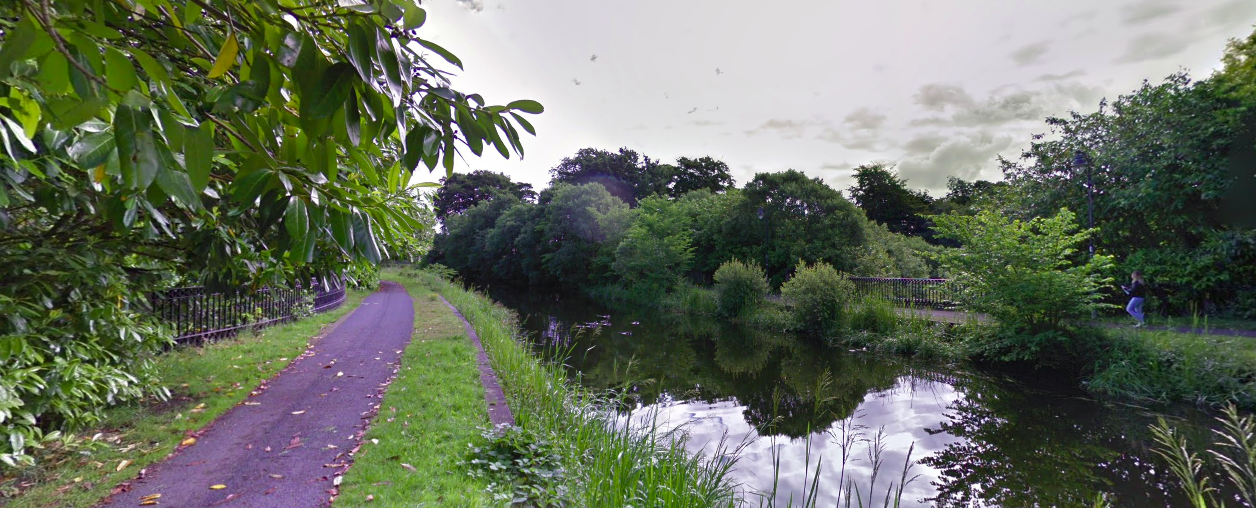
carries the Forth & Clyde Canal over the Luggie Water at Kirkintilloch, to the north of Glasgow. Built by John Smeaton between 1768-75, it was the first major canal structure in Scotland, and comprises a single impressive arch, of 50ft [15.2m] span and 90ft [27.4m] deep.
Region:
Red Wheel Site:
Transport Mode(s):
Address:
58 Peter D.
Stirling Road,
Kirkintilloch
Postcode:
Visitor Centre:
Website:
Visit websiteThe aqueduct is 37.8 metres (124 ft) long with a single arch span of 13.7 metres (45 ft), and 27.4 metres (90 ft) wide, with a full width canal that allows two boats to pass.
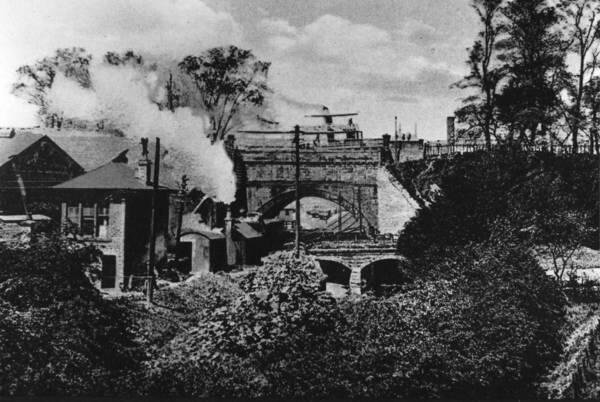
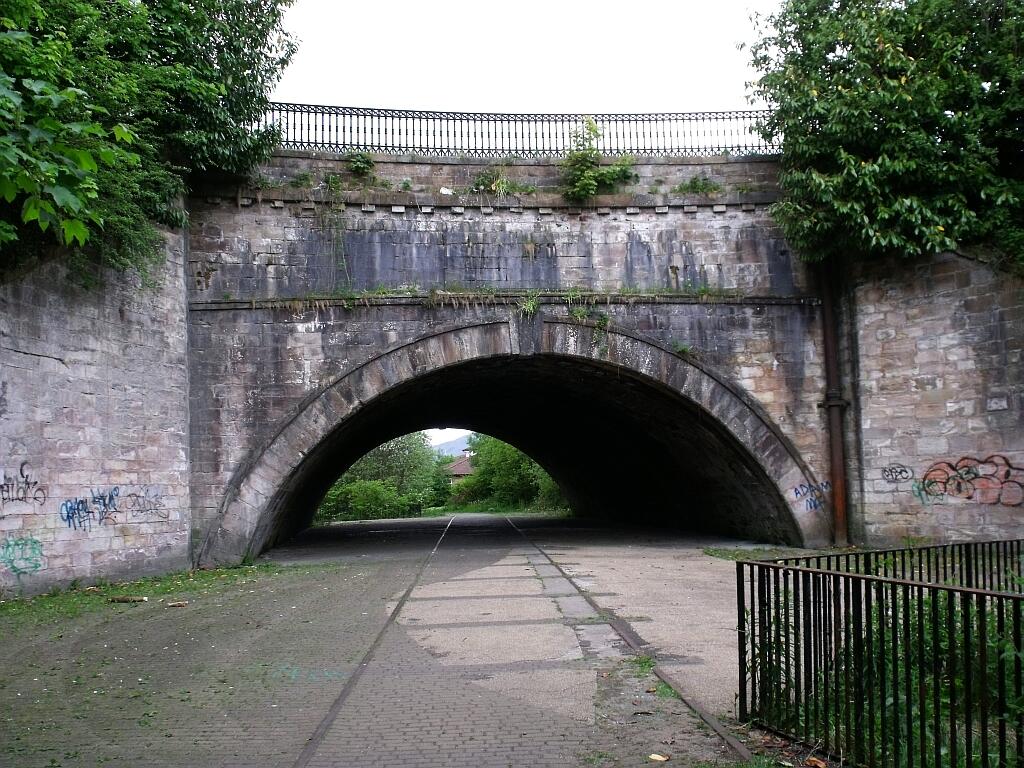
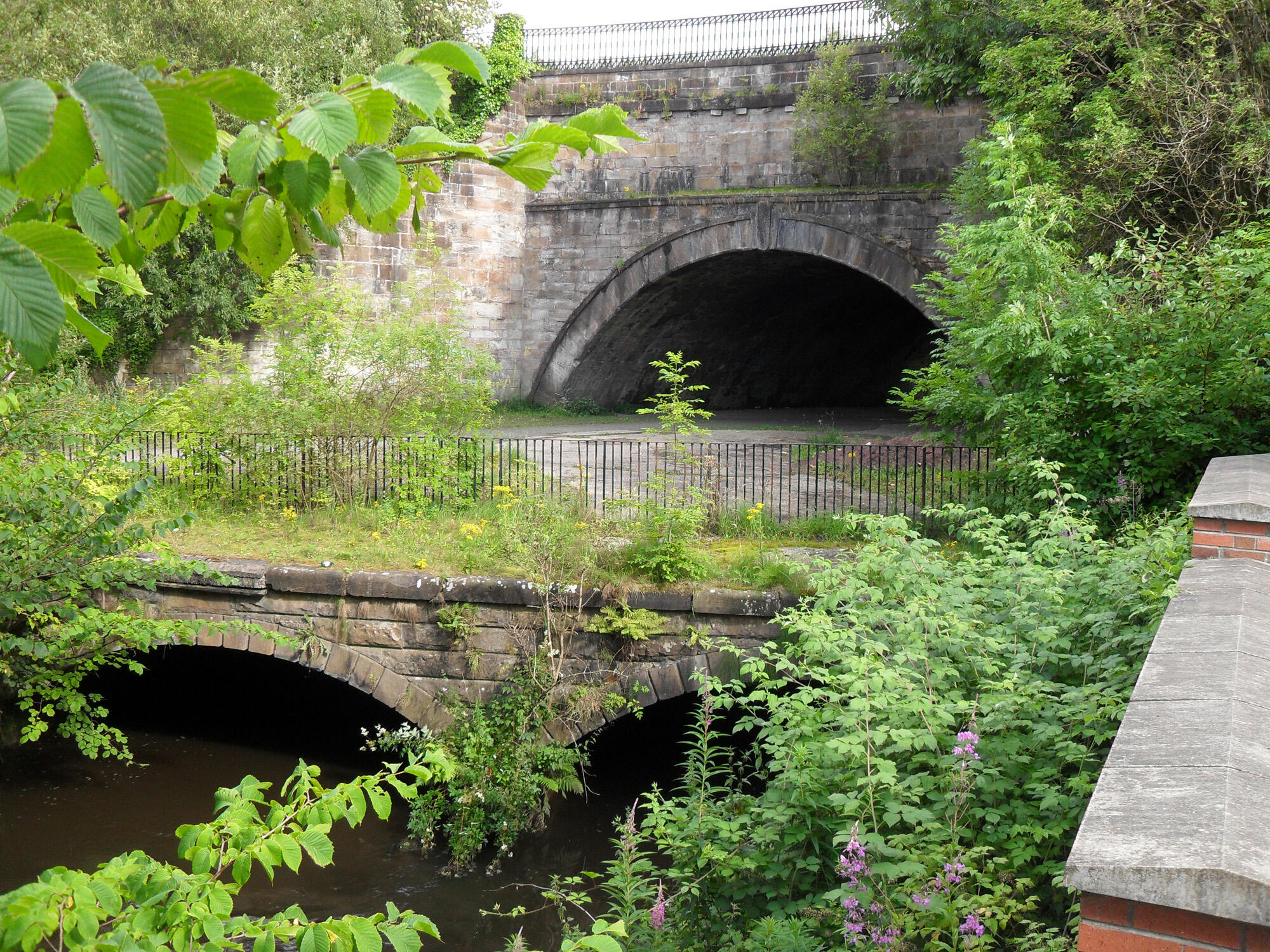
In 1848, the Campsie Branch line was constructed linking Lenzie with Kirkintilloch, and crossed the canal through the arch of the aqueduct but above the water beneath. The railway was carried on a twin-arch culvert to take the water underneath it. Closed in 1964, the railway has long been removed, and there is now a footpath beneath the aqueduct but with the lines of the rails still visible. Old black and white pictures shows a boat crossing the canal, with a train passing underneath the boat and the Luggie flowing below the train.
The sides of the aqueduct are arched, with a rise of about 1 in 10, a feature also employed on the Kelvin Aqueduct. The aqueduct and the bridge below are built from grey ashlar.
Images: © Copyright Robert Murray and licensed for reuse under this Creative Commons Licence, Google Streetview, Steam loco 5th April 1961 and three levels by Don Martin, others from East Dunbartonshire Archives & Local Studies with thanks.


east of the A8006, reached via High Street and East Side
Hutton, Guthrie “A Forth and Clyde Canalbum” (1991, 1st Edition, R Stenlake)
Hutton, Guthrie “Forth and Clyde : the comeback canal”
Dowds, Thomas J “The Forth and Clyde Canal : A History Paperback”
Skempton, A. W. [Ed.], John Smeaton FRS, ICE Publishing (1991) London ISBN 978-0727700889
“The Forth & Clyde Canal Guidebook” (Forth & Clyde Canal Society, republished 2001)