Manston Airport

Early Admiralty aerodrome that served with distinction as a Battle of Britain fighter base.
Region:
Red Wheel Site:
Transport Mode(s):
Address:
Postcode:
Visitor Centre:
Opening Times:
Open daily. See flight schedules, visit website, email customer.services@kia-m.com or telephone 08707 605755.
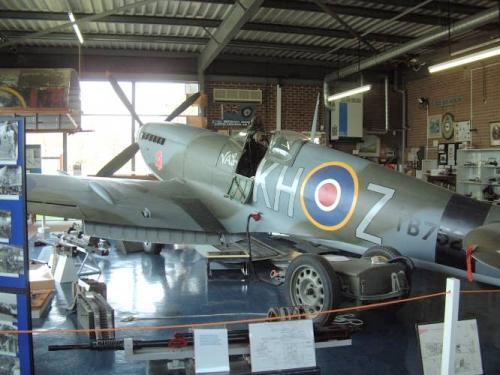
Opening times for the two museums vary - visit websites or telephone 01843 825224 (RAF Manston History Museum) or 01843 821940 (Battle of Britain Memorial Museum).
Website:
Visit websiteThe Admiralty Aerodrome at Manston was established during Winter 1915-16, with the Handley Page Training School and Royal Flying Corps following in 1916 and 1917 respectively. Located near the Kent coast, the RFC were successful in repelling Zepellin attacks bound for London.
Manston was heavily bombed and many airfield buildings destroyed during the Battle of Britain, requiring the dispersal of many airmen and staff to surrounding housing. Members of the Women's Auxiliary Air Force (WAAFs) stationed at Manston were billeted at the nearby Ursuline Convent in Westgate on Sea.
Hawker Typhoon attack aircraft were based there later in the war, and also the first Meteor jet squadron of the RAF. It was used as a departure point for airborne forces in Operation Market Garden. It was one of the few airfields installed with the Fog Investigation Dispersal Organisation (FIDO) system designed to remove fog from airfields by burning it off with petrol. Being close to the front-line and having a long and broad runway (currently listed as 2,752 metres x 61 metres) the airfield was highly attractive to badly damaged but still flying aeroplanes and became something of a graveyard for heavy bombers.
During the Cold War RAF Manston was home to the US Strategic Air Command, and SAC's 7th Air Division expanded the airfield in 1951 by extending the take-off and landing runways, building hardened concrete bunkers suitable for nuclear weapons and upgrading the support facilities for long-term use. By 1953, the base hosted deployments of B-47 and B-36 wings, each 90 day posting involving 45 aircraft, along with some 20 KC-97 Stratotankers. These deployments continued until 1955 when SAC shifted its rotational deployments to RAF Fairford and Manston was turned over to the United States Air Forces in Europe.
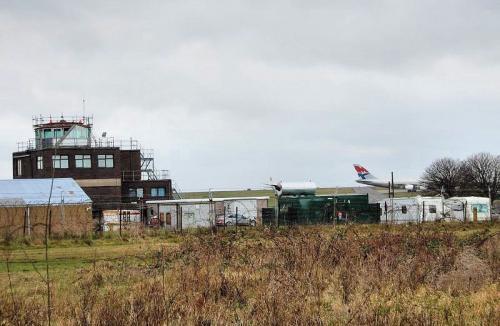
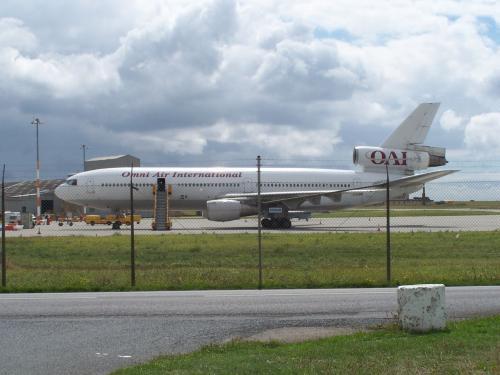
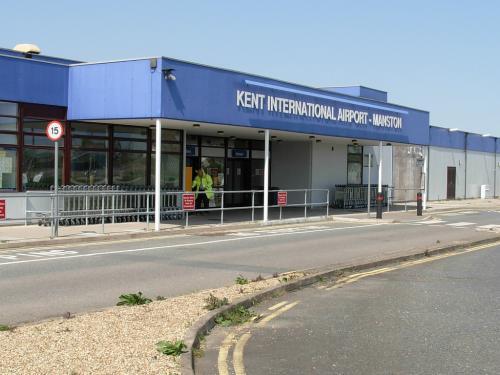
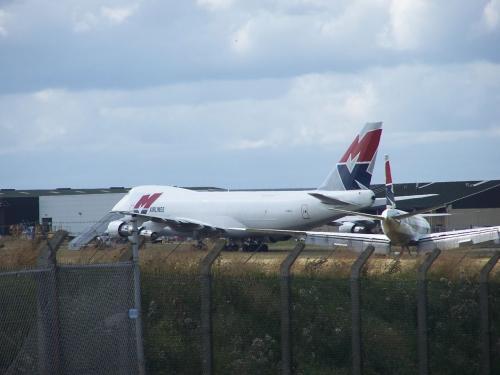
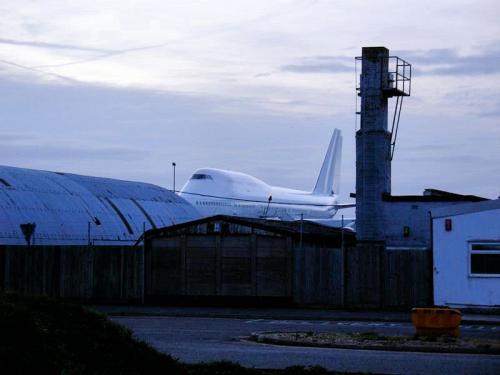
After the withdrawal of North American Sabre squadrons in 1961 the base the airfield became a joint civilian and RAF airport. Manston was designated as one of the UK's MEDAs (Master Emergency Diversion Airfield) for emergency military and civilian landings, due to its broad and long runway and the base operated a foam carpet crash landing system. It is believed also to be an emergency diversionary landing strip for NASA's Space Shuttle. In 1989 Manston became Kent International Airport, with a new terminal. It is also home to three museums, reflecting the past history of the airport.
By road: On B2050, 1.5 km from Manston, 3 km from Ramsgate.
By rail: Taxi services operate from nearby Ramsgate Rail Station.
Bowyer, Chaz, History of the RAF, Dolphin, ASIN B000O52SBU (1984)
Chant, Christopher, History of the RAF: From 1939 to the Present, Caxton, ISBN -10 1840671092 (2000)
Falconer, Jonathan, RAF Bomber Airfields of World War 2, Ian Allan, ISBN 0 7110 2080 9 (1995)
Ifould, Lloyd, Immortal Era, The Birth of British Civil Aviation, Adanr Press, ASIN B0007K0WXS (1948)
Nesbitt, Roy Conyers, RAF: An Illustrated History from 1918, ISBN -10 0750942898 (2007)
Robertson, Bruce, The RAF, a pictorial history, Hale, ASIN B0015MBVFU (1979)
Shores, Christopher, 100 Years of Naval Aviation, J H Haynes, ISBN-10 1844256617 (2009)
Taylor, J. W. R., Pictorial History of the RAF (3 vols), Ian Allan, ASIN B00187V17A (1968)
Wright, Alan, British Airports, Ian Allan, ISBN-10 0 7110 2452 6 (1996)