St Margaret’s Turntable, Edinburgh

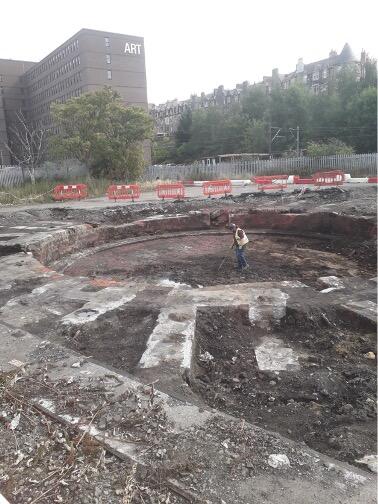
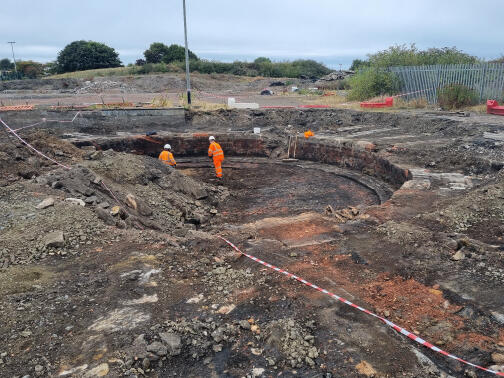
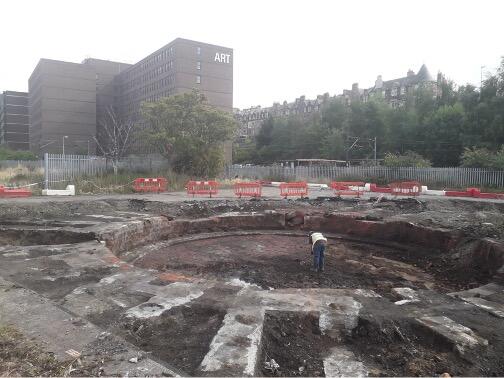
Remains of the roundtable and locomotive roundhouse shed built by North British Railways over St Margeret's well in 1845. Very recently discovered as the site was prepared for Meadowbank housing development.
Region:
Red Wheel Site:
Transport Mode(s):
Address:
London Road, Edinburgh
Postcode:
Visitor Centre:
Website:
Visit websiteNorth British Railway Study Group has commenmted "This is a remarkable discovery, recalling 120 years of railway history, which began when the North British Railway opened its line from Edinburgh to Berwick in 1846 and located its locomotive depot and works at what became known as St Margaret’s. As well as occupying an area north of the main line, the engine shed south of the line remained well-known till the 1960s"
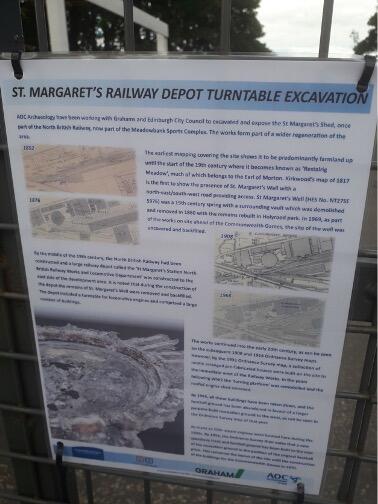
St Margaret’s Well was a spring on the route to the medieval St Triduana’s Chapel turned into a well with a vault in the fifteenth century whose wellhead was backfilled in 1860 and relocated to Holyrood Park.
The first engine shed, a roundhouse, and the workshops comprising St. Margaret's, were built atop the well by the NBR in 1845. Mainly associated over the following years with the movement of coal and general freight traffic, the depot was never to match its Edinburgh Haymarket sister in glamour of any form. Described as a dark, smoky hole filled with “Reid's Relics” a reference to NBR classes that lived out long lives there, it was nevertheless staffed by first-class enginemen and was to remain largely faithful to steam until closed in 1967. The book by Harry Knox mentioned below tells of the history, the staff, including many real characters and many anecdotes thereof, the allocated work and the engines which were based at the shed, including accidents and incidents in which they have been involved. The book, in short, describes the hard, dirty and relentless daily grind associated with the largest, if not most famous, running shed in Scotland.
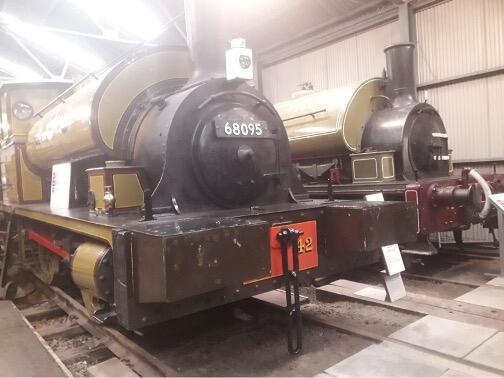
With turntables at the centre of rooved engine-sheds, St Margaret’s BR shedcode 64A had locomotives gathered to the south of the Main Line, shunters to the north. A type particularly identified with this location was the Class Y9 0-4-0 shunting tank engine, often seen gathered round the north turntable, an example of which no. 68095 survives in the Museum of Scottish Railways at Bo’ness.
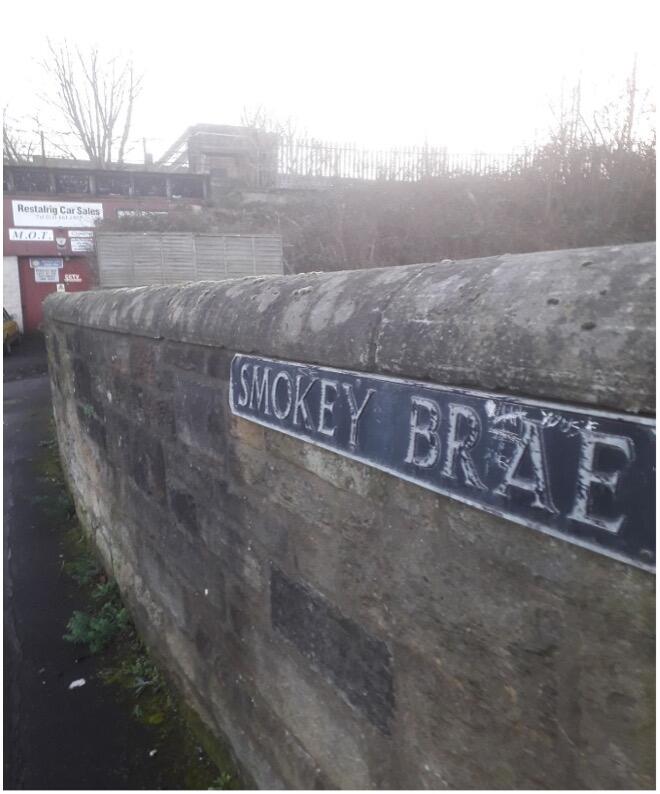
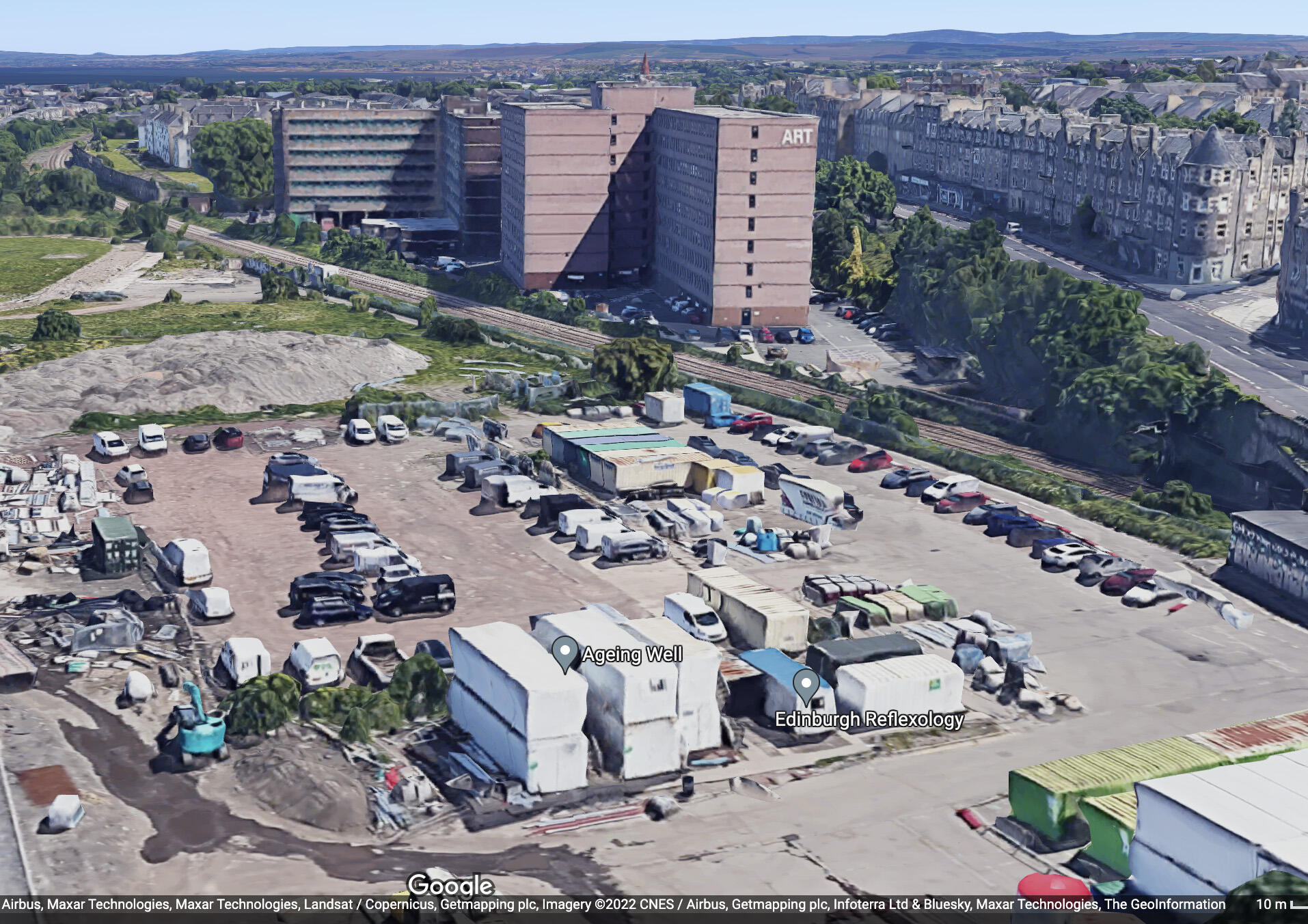
The impact of the depot on the local environment is commemorated in the street name Smokey Brae. Temporary prefabricated houses were built nearby between the wars, with a football ground which gave way to a recreational ground and speedway track, and in remodelling after the Second World War the rooved engine shed was removed to leave the shunters standing in the open. Into the 1950s two hundred steam locomotives were still based at St Margaret’s, but on elimination of steam traction the shed at once closed, and the southern part was subsequently redeveloped with government office-blocks St Margaret’s House and Meadowbank House.
The part north of the East Coast Main Line was quickly covered over to accommodate new sports facilities in support of the adjacent Meadowbank Stadium, including a velodrome for the 1970 Commonwealth Games, and these again saw service when the Games returned in 1986, become forever associated with Edinburgh’s greatest cyclist Sir Chris Hoy.
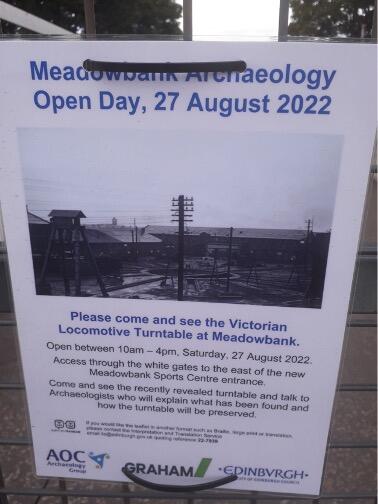
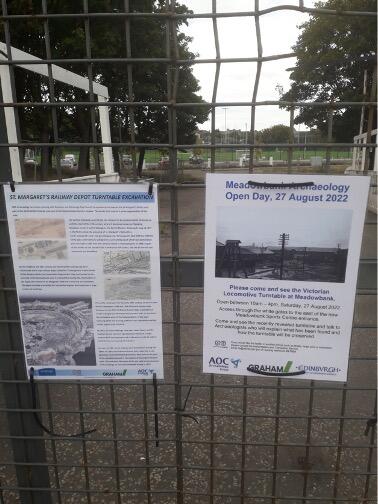
Recently the Stadium has been refurbished, and with modernised provision for cycling and other sports elsewhere the area of the covered-over depot was once again revealed as the site came to be prepared for the forthcoming Meadowbank housing development. Now the intention is to retain this historic remnant as an open-space feature for the enjoyment of future residents.
Text by John Yellowlees
Images: Thanks to John Lawson , John Yellowlees and Google Maps
Knox, Harry "St. Margaret's: The Story of the 'Other' Edinburgh Depot of the North British Railway 1845-1967” Lightmoor Press, 2015
Ross, David “The North British Railway, A History” Stenlake, 2014
Contact: Edinburgh City Archaeologist john.lawson@edinburgh.gov.uk