Awards and Loans


Restoration Awards 2026

National Transport Trust Commemorative Awards
With the exception of the Sir William McAlpine Award, projects winning a National Transport Trust Commemorative Award are selected from those already awarded Restoration Awards each year, and as such, are recognised as the best of the best of each year's restoration projects receiving a commemorative certificate in addition to the Restoration Award itself.
The Ron Wilsdon Award
The Ron Wilsdon Award is made in memory of one of the National Transport Trust's founders. His transport heritage interest was primarily cars and road vehicles, so this award generally goes to an award winning restoration of a road vehicle.
The David Muirhead Award
David Muirhead was an officer of the Trust in its early days and was exclusively a rail enthusiast; the David Muirhead Award therefore is made to a railway restoration project.
The Peter Allen Award
Sir Peter Allen was the particularly influential first president of the National Transport Trust. The award in his name is generally made for the restoration of a road steam vehicle.
The Alan Moore Award
The Alan Moore Award commemorates the significant contributions made by Alan Moore CBE, his generous support to railway preservation in this country and to his generous support of the National Transport Trust, of which he was a Vice President. As is befitting of his interests and background in railway heritage, the award in his name is made to an outstanding award-winning railway restoration project.
The Sir William McAlpine Award
The Sir William McAlpine Award commemorates the great preservationist and transport heritage enthusiast and former National Transport Trust president. The winner is selected by Sir William's widow and current President of the National Transport Trust, Judy, Lady McAlpine.
The President's Award
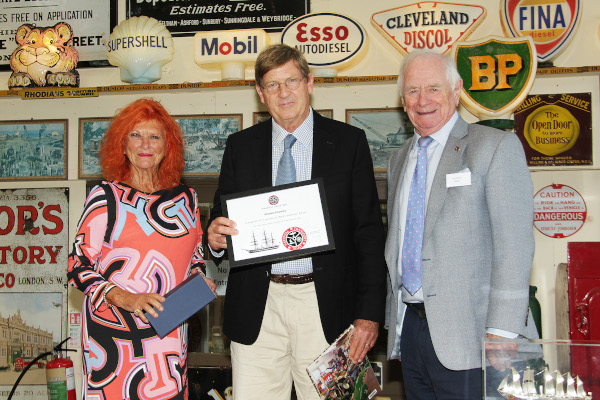
The President's award is made at the discretion of the National Transport Trust President Judy, Lady McAlpine. This year the President's Award is made to Michael Knowles.
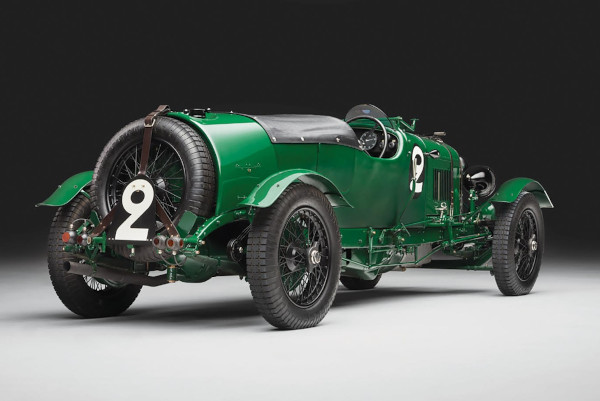
The successes of W O Bentley’s cars in the 1920s at the Le Mans 24 hour race are legendary Up until 1927, the competing cars were very recognisable as road-going Bentleys, and indeed they were driven to, and in most cases back from, the race.
In 1928 race two cars were built rather differently. No more slab fuel tank on the back of the car, no more spare wheel in the front wings. A much more steam-lined body was designed with the tank and spare wheel hidden in the faired –in tail and built by Vanden Plas in Kingsbury, north London.
In 1929 car number 10, registration YW 2557, came 3rd at Le Mans.
By this stage neither of the Bobtail cars, as they became known, had its original chassis. The surface of the Le Mans circuit was notoriously harsh, and cracked chassis were common.
The third chassis of the other Bobtail was discovered under a saloon body in 2012, and so the opportunity to create YW 2557 was taken up.
The a new body was created on the newly discovered original Bobtail chassis and running gear, and very effort was made to create the car exactly as it would have looked in 1928 when it left the Cricklewood factory. Even the paint, Parsons Napier Green, was matched to a 1926 Parsons Paint catalogue sample. A stunning recreation of a wonderful car.
Restoration Awards
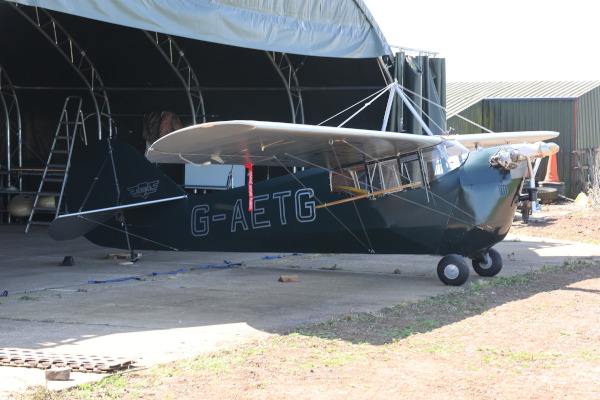
1937 Aeronca - Miles McCallum and Jeffery Teagle
This is a superb restoration of a quirky 1930s aircraft, whose return to flight will help tell the story of attempts in the 1930s to popularise private flying through the availability of cheap, lightweight aircraft.
It is not a relatively robust ‘proper’ aeroplane like a De Havilland Tiger Moth, but that is its charm. The restoration has taken place in a modest, unsophisticated hangar on a farm based on part of the old RAF Weston Zoyland, and is a credit to the owners who have undertaken the restoration.
This is a very substantial reconstruction. The aircraft itself was already a composite, having been rebuilt around the fuselage of sister aircraft G-AEWU in 1966. The original wing was destroyed in a 1969 crash: the wing now fitted is completely new, but an exact copy of a non-airworthy original and using recovered original metal fittings. It is built of Sitka spruce with a 0.9mm ply leading edge: the ribs and bows were made by Eagle, using an old vacuum tube as a steamer. The fuselage and wings are both fabric-covered wooden frameworks. They have had to make tooling specially for a lot of the missing or unserviceable parts. The engine is an original JAP flat-twin, itself a licence-built copy of the Aeronca E-113C. It is fitted with a modern carburettor for reliability: the 1969 crash was caused by fuel starvation. The propeller is a restored period item, correct for an Aeronca.
Miles McCallum is a licensed aircraft engineer and Jeffery Teagle a diligent assistant/co-owner. They have spent time learning how to remanufacture parts exactly as they were made originally – eg casting the lead mass-balance weights for the flying controls integrally with their steel mounts, a feature insisted on for the British-built aircraft but not present on US-built machines).
1944 Bedford MW Water Tanker - The Griffin Trust
The Bedford MW was one of the work-horse British military vehicles of the second war; over 60.000 were built, but the water tanker is scarce among those surviving.
The Griffin Trust, home to the Bedford Enthusiasts Club acquired the tanker three years ago as a kit of parts, the restoration having stalled on the death of the owner.
Although it was missing its water tank, the presence of a transmission power take-off which would drive a pump confirmed that it had been built and had served as a water tanker.
The restorers are to be commended for the amount of original material that has been incorporated, estimated at some 95. The tank will be ‘faux’ but other than perishables eg seals, tyres, gaskets, brake pipes etc, much of the rest is original including the wood which makes up the steps. Soft elements such as seats, canvas hood and side screens will be in new but appropriate materials
The restoration has involved a complete mechanical overhaul, return to bare metal for the bare-chassis then preparation and repaint. The cab has been rebuilt and refitted once the engine had been satisfactorily run.

The Griffin Trust’s current collection of Bedford based trucks was lacking any from the Second World War. When completed this one will help show the range of uses to which Bedford lorries were put as well as showcasing British engineering and military history.
1915 Burrell Steam Wagon - Neil Gough
The Sir Peter Alan Ward
Charles Burell & Sons did not make many steam wagons – only 113 in total and this is now the only one that is complete.
Great pains were taken to ensure the restoration from a few original parts and a boiler was 100% authentic. All the original parts sourced are from the original wagon which was scrapped in 1931. Even the owner’s plates are original.
Missing parts have been made by the owner in his own workshops – he is a professional machinist. The restoration is entirely the work of the owner, and it has taken 8 years.
It is a truly magnificent restoration/rebuild from a pile of parts that have been lying around in various places for the best part of 100 years.
Neil was lucky to have a contemporary picture of a wagon being built up in the Burrell works at Thetford and so was able to ensure the pipework in the cab was all in the correct place and followed the original routes.
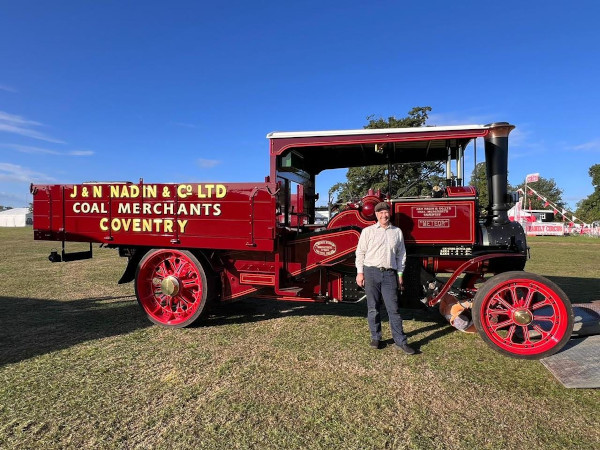
The workmanship is exceptional and it is clear that Neil is a perfectionist. The maroon paint on the wagon’s wooden body is 13 coats thick. The sign-writing was the only area where a skill was bought in, and uses a large amount of gold leaf.
Neil Gough also gets the Sir Peter Allen Award. Sir Peter was one of our founder members and an early Chairman. He had a very strong interest in road steam, and even repatriated a steam roller from Portugal and named it after his wife. Who says romance is dead?
Hudswell Clarke 0-6-0 saddle tank Derek Crouch - The Nene Valley Railway
Hudswell Clarke 0-6-0 saddle tank was a very successful design that survived the end of steam in mining use. Derek Crouch was one of the first locos to run on the Nene valley railway (formerly known as the Peterborough railway society).
It is named after a local contractor who worked it at Widdrington opencast mine and then subsequently donated it to the railway.
After coming out of service it served as a ‘gate guardian’ for many years before entering workshops for a complete overhaul to operational condition.
The significance of this restoration is that its initial cosmetic overhaul and now its full overhaul are being undertaken mainly by volunteers (or by paid staff but in their own time) except where skills required would be largely beyond the small team. In practical terms this means they have contracted out a new tube plate, firebox and firebox hole door.
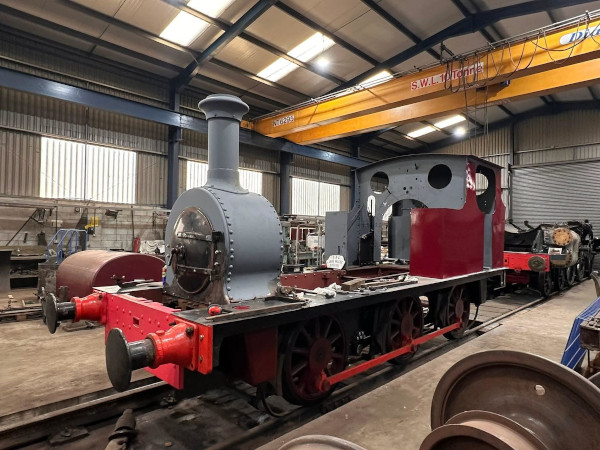
They rely on Nene Valley railway only for workshop accommodation and tools.
The quality of workmanship is excellent and the aim is that it will outlast two boiler tickets and thus it will be 20 years before any reworking is required.
The primary team are all young people, one of whom now works for the railway, one in engineering in Peterborough and one for Locomotive Services Ltd in Crewe, demonstrating the value that heritage railways can bring to young engineers.
It is planned to use it off-peak with three coaches, for driver experience and for goods demonstrations.
Like the manning Wardle, it will be far more economic to run that most of its perhaps more glamorous shed-mates.
1926 Garrett Trolley Bus No.26 - The Long Shop Museum
Richard Garrett Engineering in Leiston Suffolk, were pioneers in battery electric commercial vehicles and exploited that experience to diversify into the manufacture of public transport vehicles.
They produced 101 examples of single-and double-deck trolleybuses between 1923 and 1930 but only 3 examples are known to exist in the UK. Fleet No.26 is the only example of the front entry/rear exit version.
This vehicle, one of 15 supplied to Ipswich Corporation Transport, entered service in 1926 as fleet number 26 and retired from service in 1945. Post retirement all driveline components and the interior were stripped out and it began a new career as a summer-house in a field by the Orwell from which it was extracted with considerable help from the army, as we will see in a moment.
When acquired by The Long Shop, the interior was an empty shell which required significant reinforcing prior to removal from the site and transport to Leiston site by military volunteers.
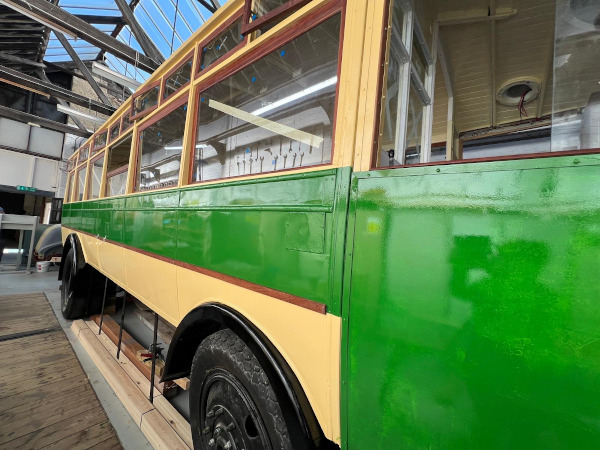
The work has been done by volunteers - mechanical, electrical, metalwork, woodwork, upholstery,, hand-painting, glass work resulting in a vehicle which represents its appearance when in service, and though it will not move under its own power, it can be moved on its own wheels and be steered. It will add to the museum’s impressive display of the talents and achievements of Richard Garrett and the people of Leiston.
de Havilland DH85 Leopard Moth - Dave Reid
The Leopard Moth was one of the first practical touring and transport aeroplanes of the 1930s and Sir Geoffrey de Havilland's favourite type. There are 9 Leopard Moths still registered out of 133 built at Edgware.
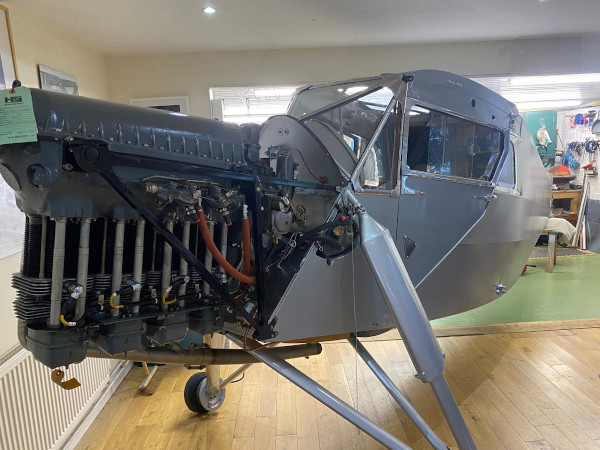
The Leopard Moth was the first de Havilland to use a wooden (plywood) monocque fuselage – a technology which later was to become famous in the Mosquito
This one is virtually a new aircraft, as inevitably will be the case with any 90-year-old wooden aircraft being returned to flight, but has a continuous history. Restoration to the relevant airworthiness standards means the replacement of far more of the structure than might be expected of a land or marine project. In this case, the new fuselage was built for a previous owner some 20 years ago, and the wings have only recently been completed. The engine is also a replacement, now a DH Gipsy Major rather than the original Gipsy III – visually very similar but more powerful and reliable.
The standard of work on the new structure is very high – as would be expected – and the work done by the owner on the cabin interior and other parts which he has made ranges from good to very good. This is an impressive restoration of an aircraft with a fascinating history in the Australian Outback, and a rare survivor of what was an unusually civilized light aircraft of the period.
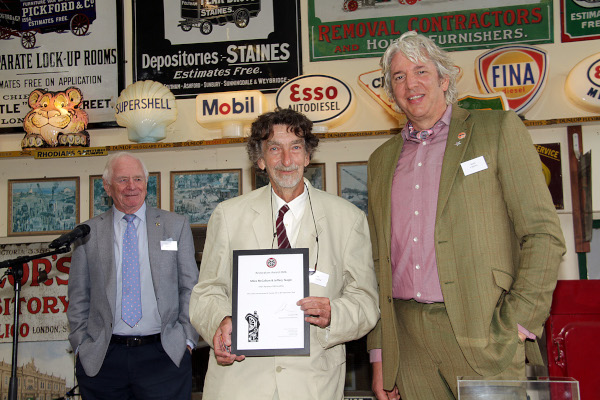
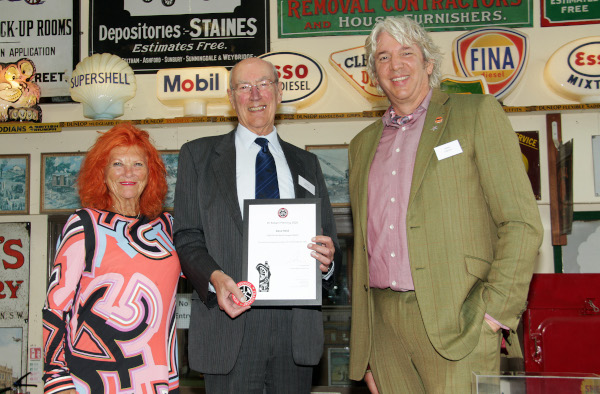
Dave Reid has done a fantastic job on this aircraft and he gets the Dr Robert Pleming award for 2026. Robert was one of our Trustees and headed the project which brought a Vulcan bomber back to flight.
The award was accepted by John Broad on Dave Reid's behalf.
1926 Manning Wardle Locomotive no 2047 - Warwickshire Industrial Locomotive Preservation Trust
This locomotive (Works no 2047) was the last manufactured by Manning Wardle in Leeds before the company was wound up in 1927. The first owner was the Rugby Portland Cement Company. After 40 years service it was retired and in 1967 Rugby Portland Cement, offered it to the Warwickshire Railway Society. It was the second locomotive to arrive at the embryo Severn Valley Railway where it was used for 10 years on works trains before it was sidelined following a boiler fault. The boiler was found to have 3 lap joints, a method of construction which had been declared dangerous and obsolete in a paper read to the Institution of Mechanical Engineers in 1866, which begs the question as to why this boiler was constructed in this way 60 years later.
The years of inactivity were not kind to 2047 and the challenge faced by Warwickshire Industrial Locomotive Preservation Trust was to reconstruct a derelict steam locomotive into a working locomotive. It was designed and used as a works shunter but to make it viable for the future it needed upgrading to make it suitable to haul passenger trains. Israel Newton were engaged to sort out the boiler and the mechanical work is done in the Severn Valley Railway workshops by volunteers.
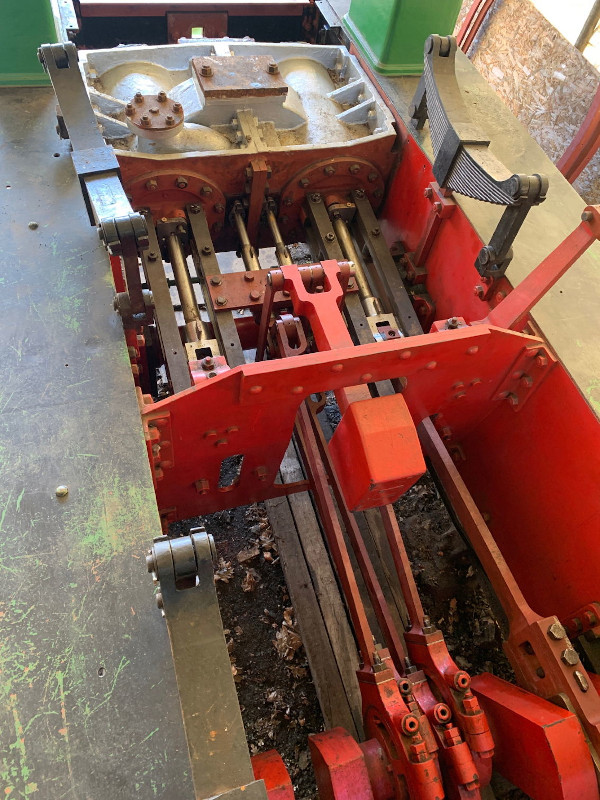
Unsophisticated 2047 might be, but she is the sort of locomotive which will be able to earn her keep in the environment in which our preserved railways are now operating.
1914 Marshall Traction Engine - Dan Jones
The Ron Wilsdon Award
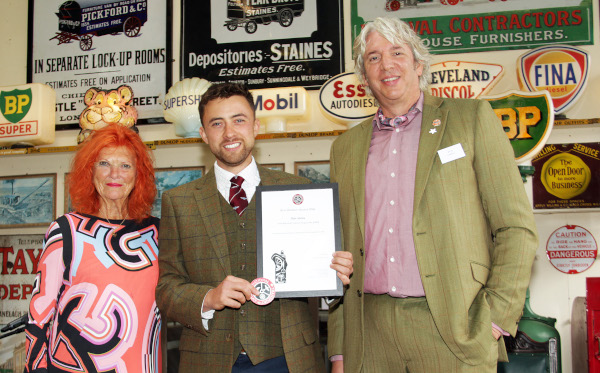
As part of this restoration project, Dan has carried out extensive boiler rebuild, full mechanical overhaul, full overhaul of steam fittings, sand blasting and full repaint and lining throughout.
Its first owner was James Allen of Burton Latimer, Northants, a threshing contractor. It retired in 1953 but remained unloved until 1987 when it was initially brought back into steam, though not given a full restoration until 1990.
It became a regular visitor to the late lamented Great Dorset Steam Fair
This second restoration began in 2020 and absolutely everything was dismantled, inspected and repaired or replaced as required, including fabrication of a copy of the original Marshall patented firebox.
A good example of the attention to detail is the injector. This model of engine was sold by Marshall’s with steam injection as an option only. As this machine was to be used largely statically only a water pump was fitted. Dan wanted to use the engine on the move, so wanted an injector. As they are unavailable, he made one.

Dan has form in this area. He won an NTT award for his Aveling and Porter road-roller in 2020. He acknowledges the lessons he learned on the first restoration have been vital to the success of the second.
Northern Ireland Railways 80 Class power car No. 69 - Downpatrick and County Down Railway
Built in 1979 at Derby by British Rail Engineering Limited specifically for Northern Ireland Railways, 80 Class No. 69 is the motor car of a unique Diesel Electrical Multiple Unit (DEMU). The 80 Class formed the backbone of passenger services across Northern Ireland for more than three decades and became synonymous with the region’s publicly owned railway.
For a generation of passengers, the 80 Class defined rail travel in Northern Ireland. It also has a distinctive chapter of cross-border work, having been leased by Irish Rail to work the Cork to Cobh services in the 1980s.
No. 69 also carries additional and unique historical weight as the final vehicle to operate as the Peace Train.
The vehicle is undergoing substantial bodywork renewal, including removal of corrosion, replacement of deteriorated steel sections and correction of historic in-service modifications. Earlier expedient repairs are being reversed to return the vehicle to its correct late-1970s configuration. The approach prioritises long-term structural integrity rather than cosmetic refurbishment
 .
.
Internally, the saloon is being restored to its original Northern Ireland Railways specification, with accurate finishes and layout reinstated. At the same time, a dedicated wheelchair-accessible space is being incorporated to ensure the vehicle can operate inclusively within a modern heritage railway environment.
The objective is to return No. 69 to active passenger service as a structurally sound, historically accurate and accessible representative example of Northern Ireland’s principal post-1970 diesel multiple unit class
Awards & Loan
See more information about an Award or LoanThe National Transport Trust makes loans to groups, associations and individuals at advantageous rates for the restoration of artefacts - whether mobile or part of the infrastructure. Applications must be supported by a simple business plan which demonstrates the financial viability of the project. A sample business plan is available on request from the Treasurer.
The Trust does occasionaly make Awards for schemes which further the preservation movement. Again if you wish further information please contact the Treasurer.
Read More