Aberdeen Ferryhill Depot

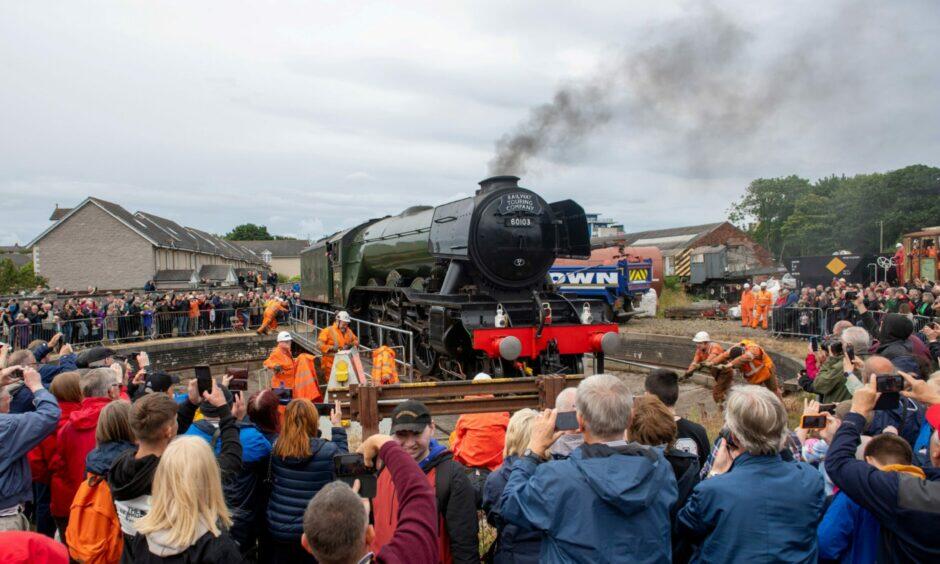
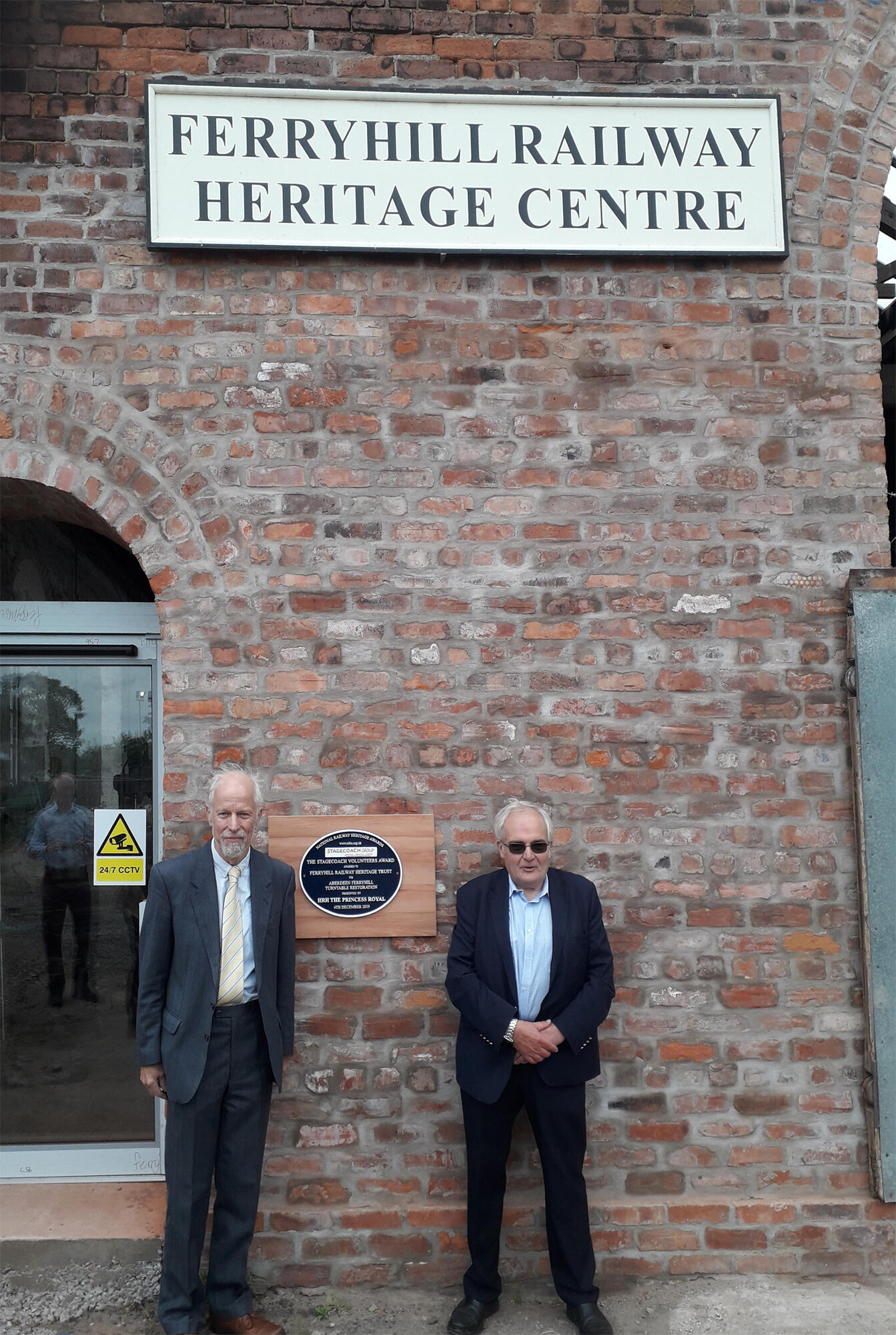
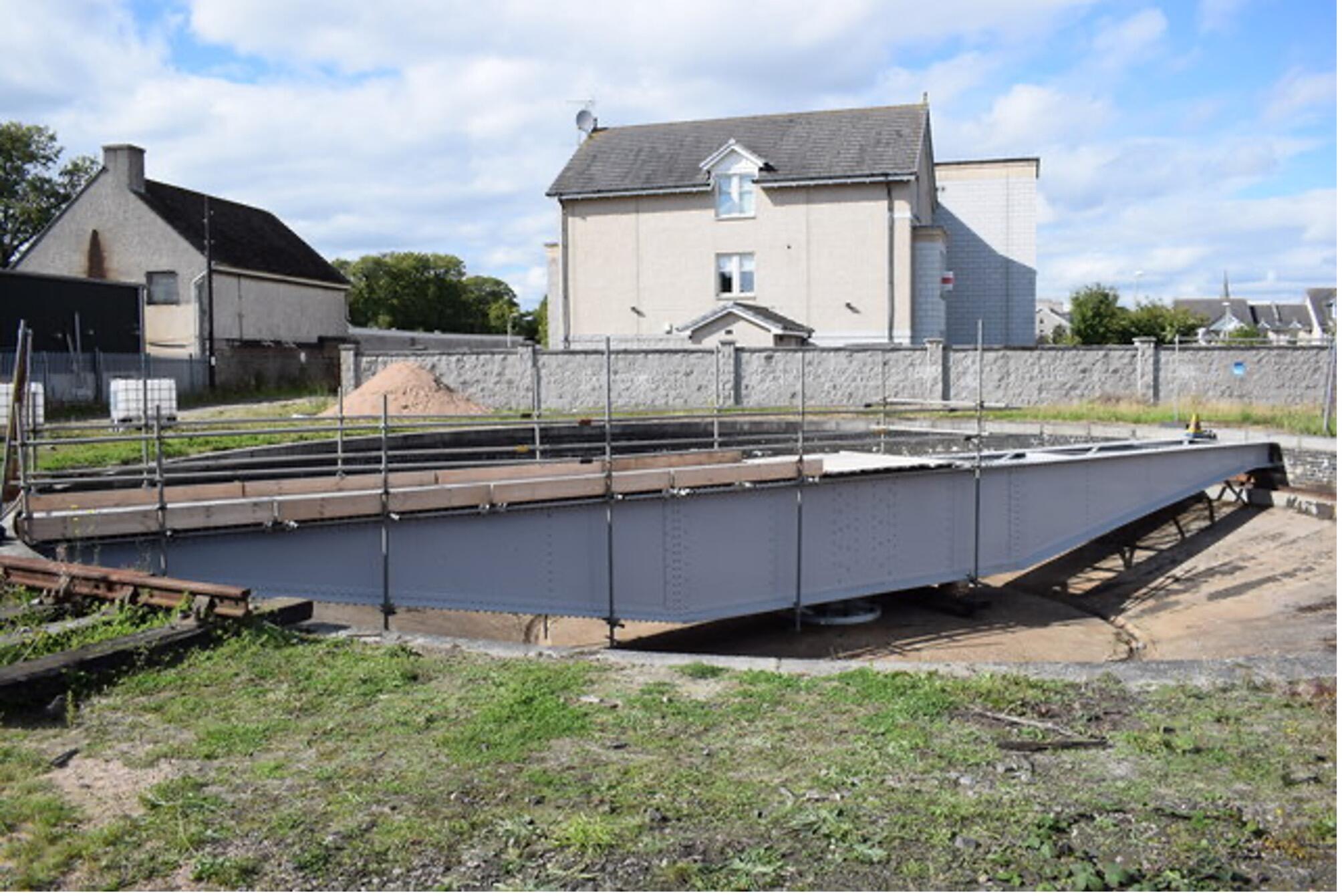
Ferryhill Railway Heritage Centre is a working railway heritage site, its 70 foot restored Ransomes and Rapier turntable operates 7 times each year.
Region:
Red Wheel Site:
Transport Mode(s):
Address:
Polmuir Ave,
Aberdeen
Postcode:
Visitor Centre:
Website:
Visit websiteFerryhill was the location of Aberdeen's first engine shed, situated within the 'V' of the junction between the Aberdeen and Deeside Rlys. The 1850 engine shed was a modest affair capable of housing two engines under cover and another two partly sheltered from the elements. It was situated on the W side of the main line close to the River Dee. A 20ft [6.1m] diameter turntable (originally intended for Montrose) was installed until a much larger and more permanent one could be acquired. By 1851, the shed was being used by engines of the Aberdeen Rly, the Scottish Central Rly, and the Scottish Midland Junction Rly, who were operating a locomotive pool. Some enlargement of the facilities must have taken place, although it is unclear when. It is most likely that the Caledonian Rly decided to redevelop the facilities in the late 1860's; the main shed building measured 166 by 38ft [50.6 by 11.6m] while the original turntable was replaced by one of 40ft [12.2m]. The North British Rly began to stable its locomotives at Ferryhill after they acquired running powers over Caledonian Rly metals from Montrose, but the resulting problems regarding payment soured relations between the two companies, particularly as the North British Rly never considered the construction of their own shed.
The Ferryhill shed was enlarged following the appointment of Dugald Drummond as Locomotive Superintendent of the Caledonian Rly in 1882, and in response to both his construction of larger engines and the increasing fish traffic at the period. The shed building was lengthened at the back to a length of some 230ft [70.1m], while a workshop for the fitters and a modern 50ft [15.2m] diameter turntable were installed.
The shed was further comprehensively redeveloped in 1907/8, when a building measuring some 214ft [65.2m] long by 188ft [57.3m] and largely of brick was constructed; there were offices and stores. Included in the contract were a coaling shed, a sand-drying kindling furnace, and the locomotive foreman's house. This building opened in July 1908. The two South roads served a purpose-built repair and machine shop, while the covered manual coal stage and the 70ft [21.3m] Ransome and Rapier turntable were placed on the South side of the main shed, and a sand furnace near the entrance to the repair shop. The water tower formed part of the main building, on the NE side of the coal stage, and the old shed building was converted into a wagon repair shop. Disagreement between the North British Rly and the Caledonian Rly over the use of the facilities continued, the former company being prohibited from using the coaling stage so as not to impede the locomotives of the latter. This shed formed a capacious facility, being one of the few Caledonian Rly shed capable of housing its entire allocation under cover.
In 1924 the transfer of servicing to the former GNoSR shed at Kittybrewster was considered, but this proposal foundered on account of the restricted track occupancy between Aberdeen and Kittybrewster. By the mid-1930's the LNER stationed about thirty locomotives at Kittybrewster, several of them of the largest size.
Ferryhill was known in BR days as 61B. The March 1953 allocation stood at forty locomotives. In 1953, a wheel-drop was installed at the shed to eliminate the need to use a breakdown crane for lifting, or to send locomotives to Perth or Dundee. The first diesel locomotives arrived in 1958, displacing steam locomotives used for shunting. Main-line diesel locomotives soon followed, and after the swansong of Gresley A4 Pacifics on the three-hour Glasgow expresses complete dieselisation was achieved in 1966. Ferryhill then became a diesel depot and later a signing-on point, but closed on 26 December 1987
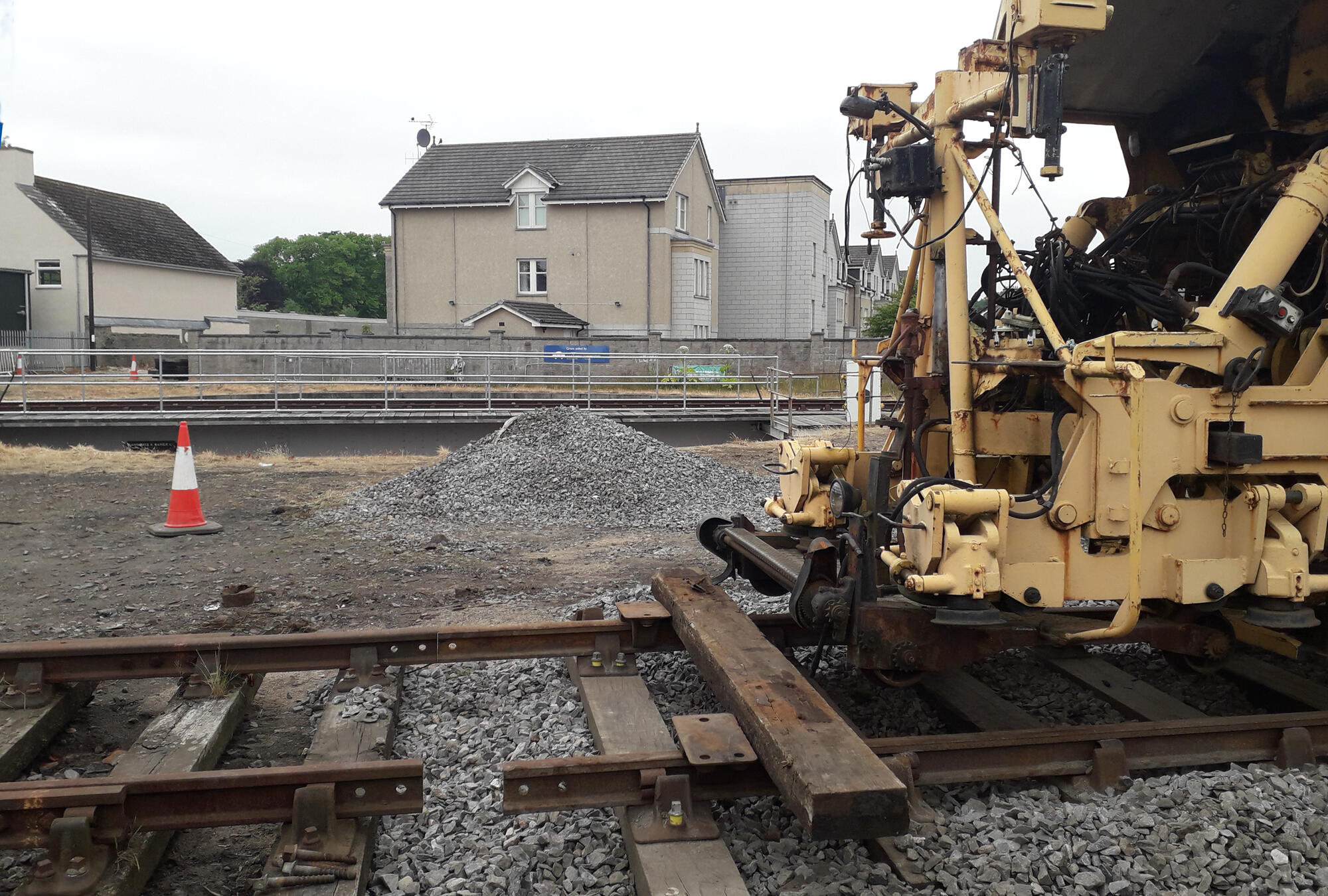
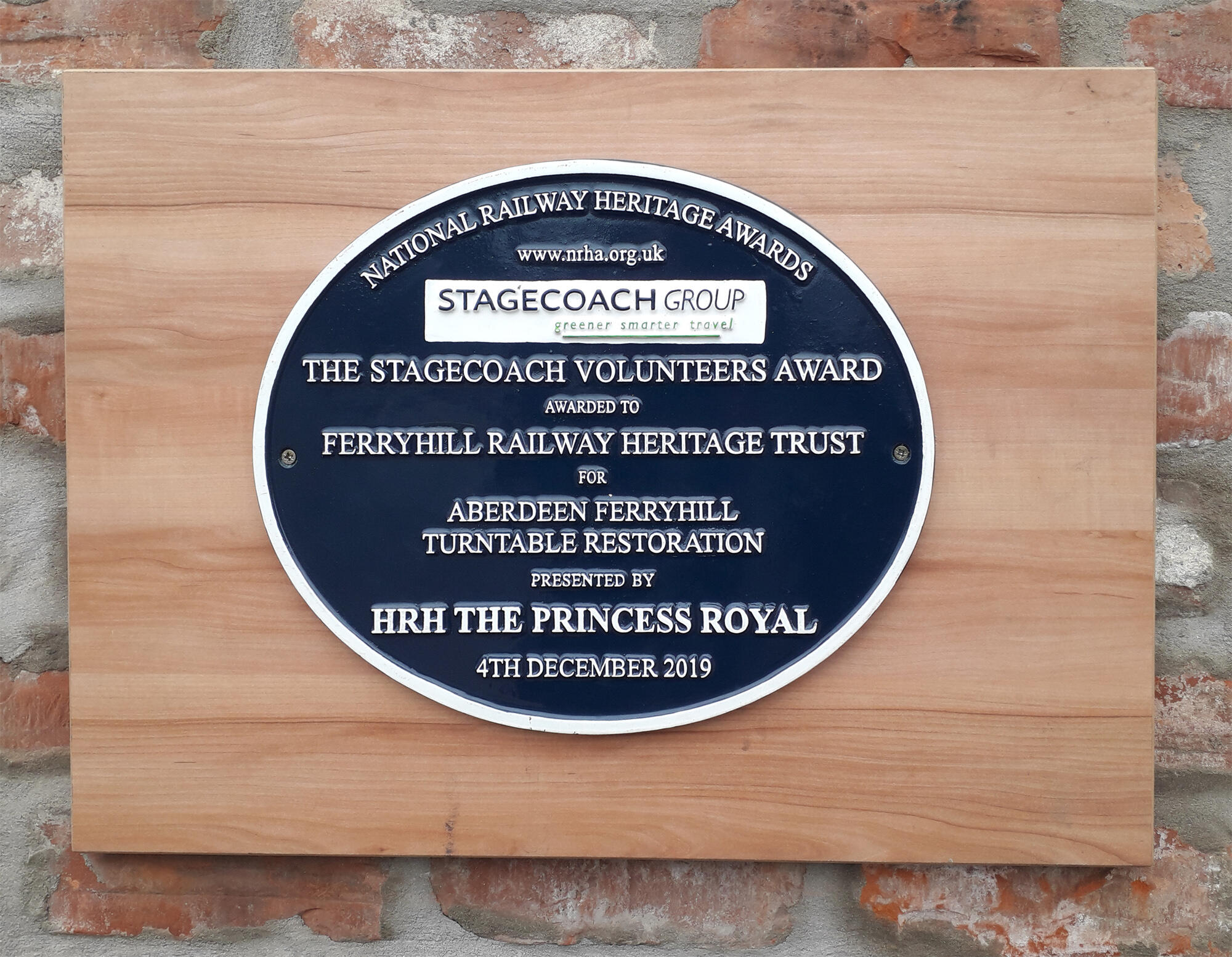
The Ferryhill Railway Heritage Trust was established in 2007 to take over the remaining building and turntable, restore it and transform the site into a working railway heritage site for the North East of Scotland. In this endeavour, the Ferryhill Railway Heritage Trust has had widespread support, notably from the Railway Heritage Trust. The original Trustees of the Ferryhill Railway Heritage Trust were nominated by the Royal Deeside Railway Preservation Society, the Deeside Railway Company, the Bon Accord Locomotive Society, and the Aberdeen Model Railway Club, demonstrating the commitment of these societies to the success of the FRHT.
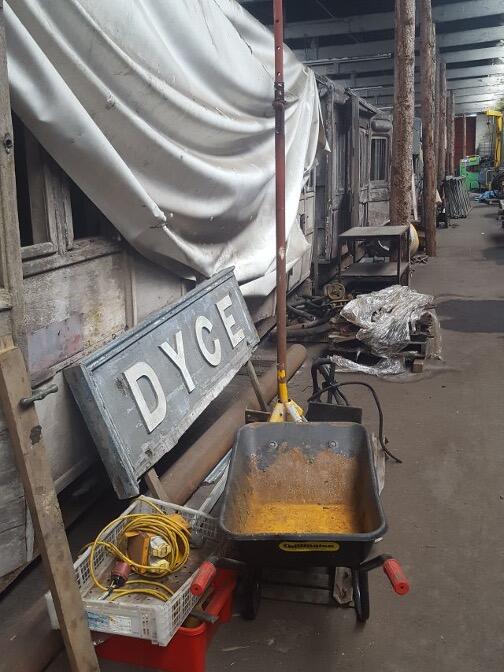
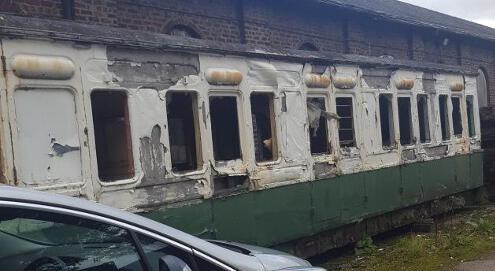
Commissioning of the restored turntable in 2019 has enabled Aberdeen to become a destination for steam-hauled railtours, notably The Aberdonian from Edinburgh whose programme has lately had to be curtailed owing to the non-availability of Tornado. On the site there is a restored Ransomes and Rapier Locomotive Turntable and an 1850's Engine Shed. Visitors are able to see steam locomotives being turned on around 7 occasions during the year. Dates are published in advance by the Tour Operators. During normal operation, the Centre can open the Engine Shed for supervised visits and visitors will be able to see the various railway artefacts on display, including Victorian railway carriages, Wickham Trolleys and steam and diesel locomotives under restoration. Outside there is a collection of rolling stock including two railway cranes one of which is steam powered and is operated on special occasions.
south of the city centre, near the Duthie Park
Jones, Keith; The Railways of Aberdeen : 150 Years of History