Carrick-a-Rede Rope Bridge


The bridge links the mainland to the tiny volcanic island of Carrickarede (from Irish: Carraig a' Ráid, meaning "rock of the casting").
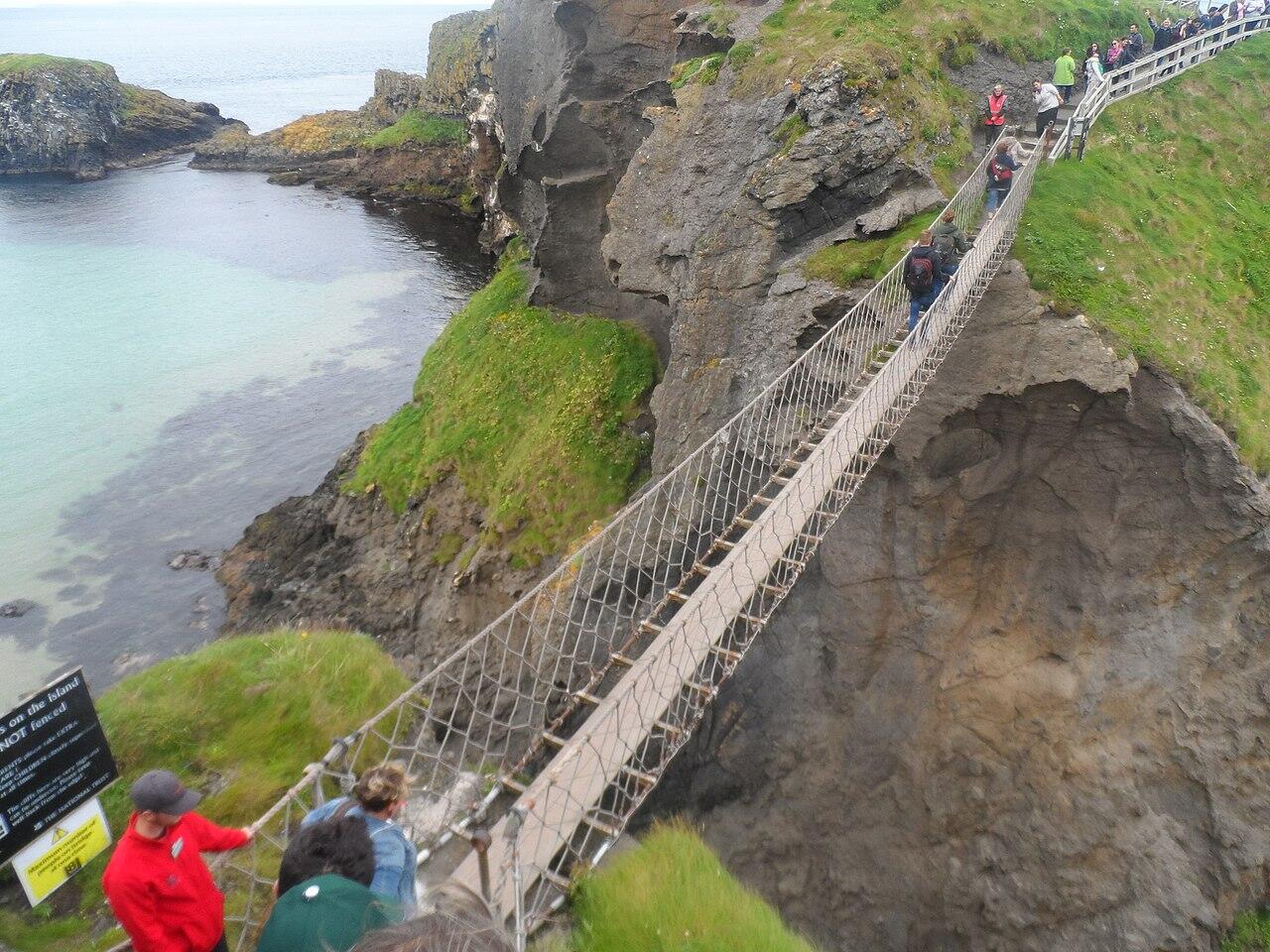
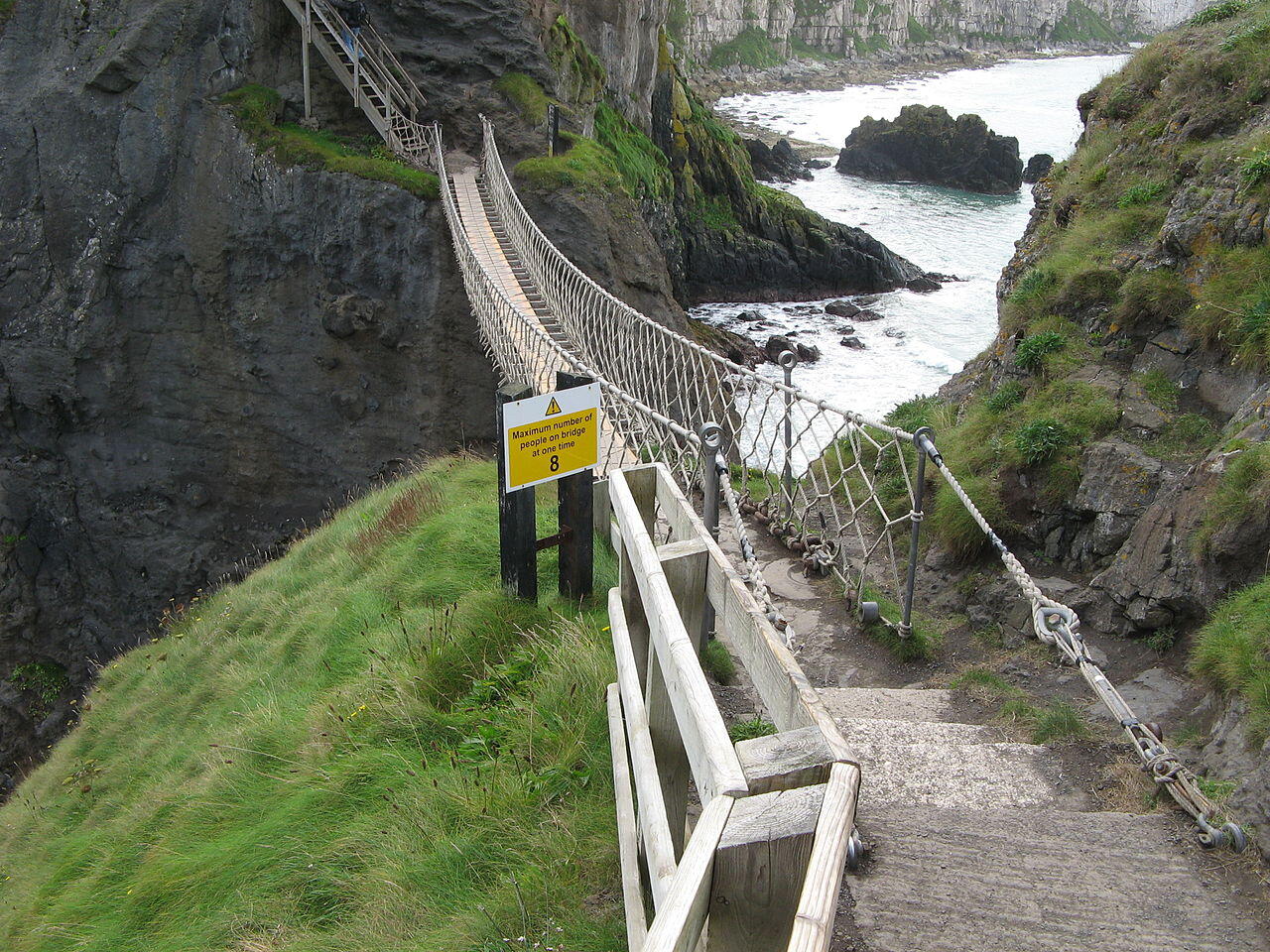
It spans 20 metres (66 ft) and is 30 metres (98 ft) above the rocks below.
Region:
Red Wheel Site:
Transport Mode(s):
Address:
119a Whitepark Road,
Ballintoy,
County Antrim
Postcode:
Visitor Centre:
Website:
Visit website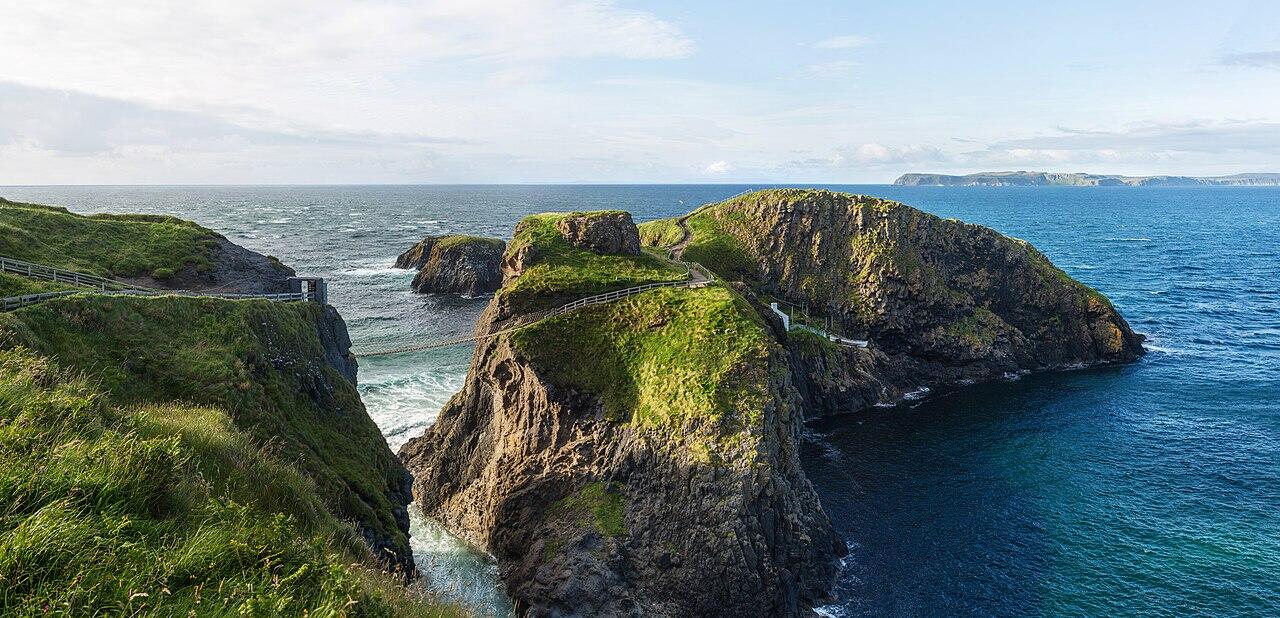
History : Atlantic salmon has been fished at Carrick-a-Rede and Larrybane since 1620. But it was not until 1755 that the first rope bridge between the mainland and Carrick-a-Rede Island was erected to reduce reliance on a boat to reach the island. In the 19th century more than 80 fishers, 21 salmon fishers and 10 fish carriers were working in the parish of Ballintoy. Catches of up to 300 salmon a day were common until the 1960's. The years of salmon fishing are now just a memory. Fishing pressure at sea and river pollution led to a decline in salmon. In 2002 the last fish was caught at Carrick-a-Rede.
Alex 'Achi' Colgan, the last fisherman at Carrick-a-Rede, took over the licence when his uncle retired and worked there for over 30 years, leaving in 2002 when co-workers were hard to come by. This fishery needs four men to work it and it’s hard, heavy work. Now over 80, the Ballintoy man recalls: "It was hard work, It was the hardest salmon fishery on the coast. You're stood on the edge of a cliff, it's very deep water. I suppose it was dangerous but we never had any accidents. When the weather was bad it was dangerous enough."
Achi recalls that they would regularly catch up to 300 fish a day. But in the final season before closing, they only caught 250 in total from spring to autumn. "It was not viable. There were'nt enough fish. The same applied to the whole coast. It was sad enough, but we couldn't pay anybody to work. There were some years it didn't pay at all."
A superb restoration project has helped preserve the heritage of a 400-year-old Salmon Fishery at Carrick-a-Rede. The project, a partnership between the National Trust and DARD/North East Region (NER) Local Action Group, ensures that the history and traditions of a once thriving industry will live on for future generations. A new guided visitor experience helps provide a sense of place and connection with the famous rope bridge on the North Antrim coast. The project has helped conserve and open once again the fisherman’s cottage, which for decades was used by the fishermen who sheltered there as they worked at the fishery. To provide the feeling that the fishermen have just stepped outside, visitors have access to oral history and interpretation which tells the story of this bygone era.
The bridge links the mainland to the tiny volcanic island of Carrickarede (from Irish: Carraig a' Ráid, meaning "rock of the casting").
It spans 20 metres (66 ft) and is 30 metres (98 ft) above the rocks below.The bridge is mainly a tourist attraction and is owned and maintained by the National Trust. In 2018, the bridge had 485,736 visitors. The bridge is open all year round (subject to weather) and people may cross it for a fee.
The bridge has taken many forms over the years. In the 1970s it had only one handrail and large gaps between the slats. A new bridge, tested up to ten tonnes, was built with the help of local climbers and abseilers in 2000. Another was built in 2004 and offered visitors and fishermen alike a much safer passage to the island. The current wire rope and Douglas fir bridge was made by Heyn Construction in Belfast and raised early in 2008 at a cost of over £16,000 There have been many instances where visitors, unable to face the walk back across the bridge, have had to be taken off the island by boat
The original Carrick-a-Rede Rope Bridge was first erected by salmon fishermen.
Seamus Heaney describes the bridge in his 1978 poem: A Postcard from North Antrim:
A lone figure is waving
From the thin line of a bridge
Of ropes and slates, slung
Dangerously out between
The cliff-top and the pillar rock.
Photo Credits: Photo by DAVID ILIFF. License: CC BY-SA 3.0;
| Sheila1988 |
Textman at Dutch Wikipedia, CC BY-SA 2.5 <https://creativecommons.org/licenses/by-sa/2.5>, via Wikimedia Commons
Entry from Wikipedia
By road
on B15, 7 miles east of Bushmills, 5 miles west of Ballycastle. Giant's Causeway 7 miles Parking: free
By bus
Ulsterbus 172 from Coleraine; Ulsterbus 252 and 256 from Belfast; and Service 402 Causeway Rambler Visit Translink website for detailed information
By cycle
NCN93, 5 miles
On foot
on North Antrim Coastal Path and road, 7 miles from Giant's Causeway, ½ mile from Ballintoy village and 1½ miles from Ballintoy Church on Harbour Road
National Trust Carrick-a-Rede (25 May 2017). "Good news! Carrick-a-Rede Rope Bridge has reopened". Twitter. Archived from the original on 25 May 2017. Retrieved 25 May 2017.
McCreary, Mark (29 June 2016). "Brave or bonkers? Rope bridge pics to make you shudder..." belfastlive. Retrieved 25 January 2018.