Dalmuir Drop Lock

The only known example of a drop lock - a short length of canal can be lowered temporarily whilst a boat passes under an obstruction.
Region:
Red Wheel Site:
Transport Mode(s):
Address:
Dumbarton Road,
Clydebank
Postcode:
Visitor Centre:
Website:
Visit website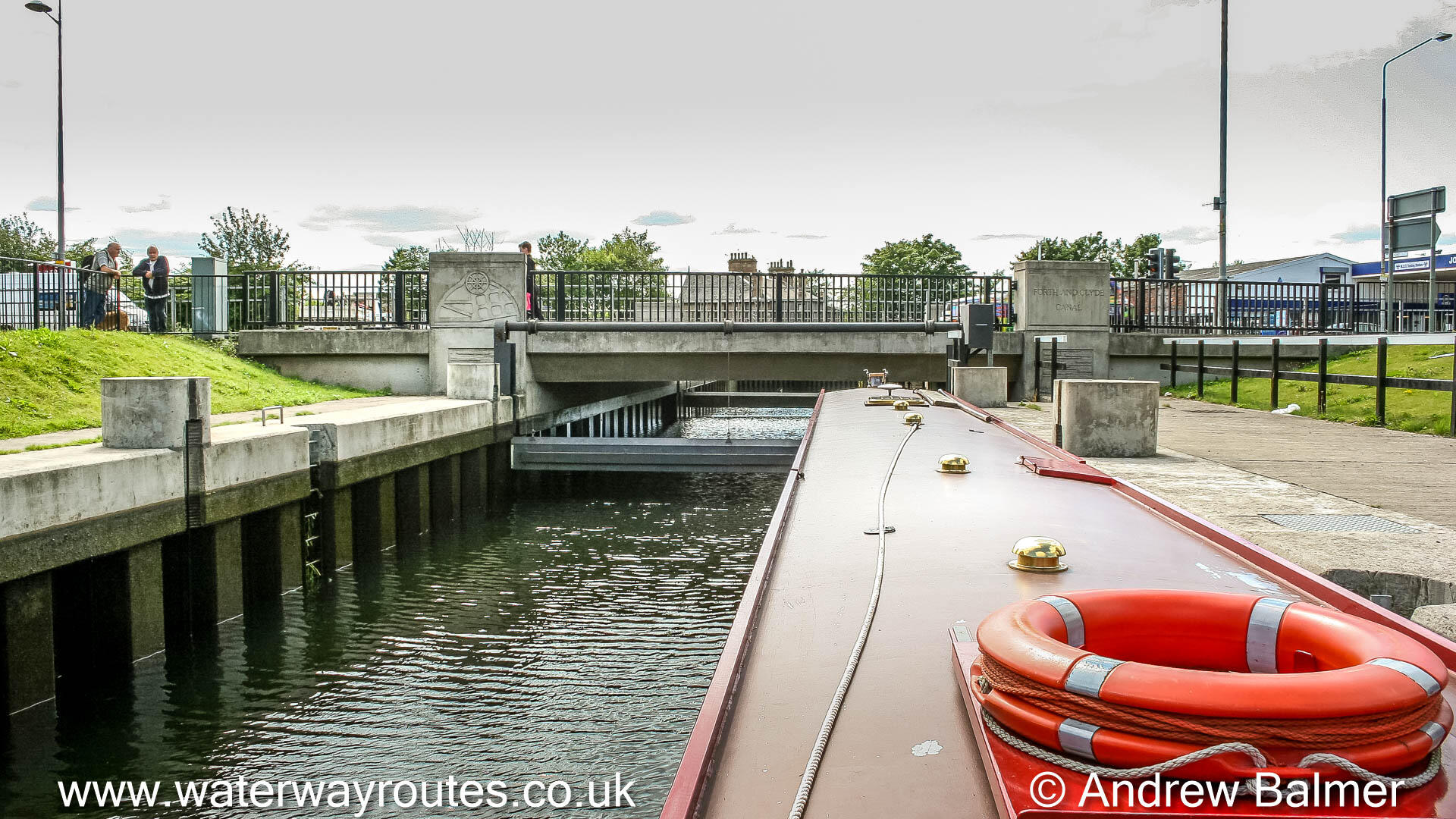
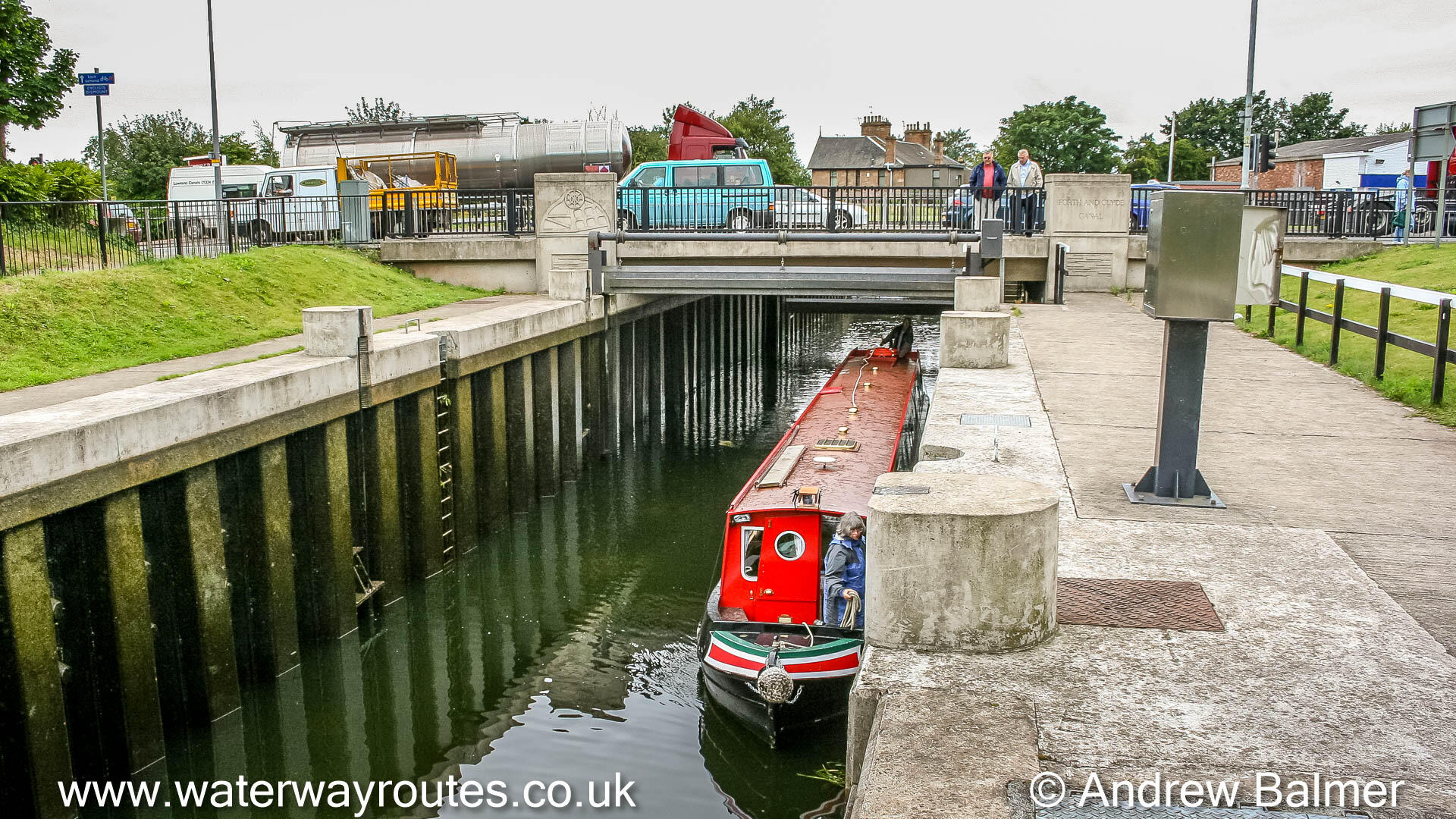
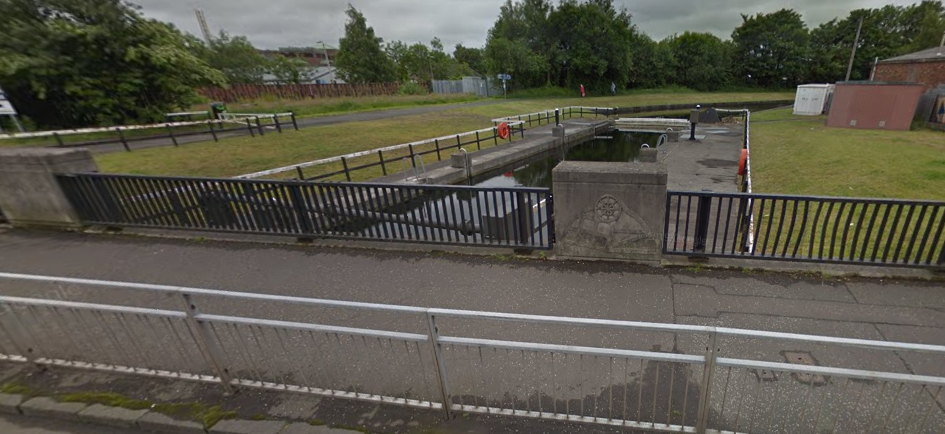
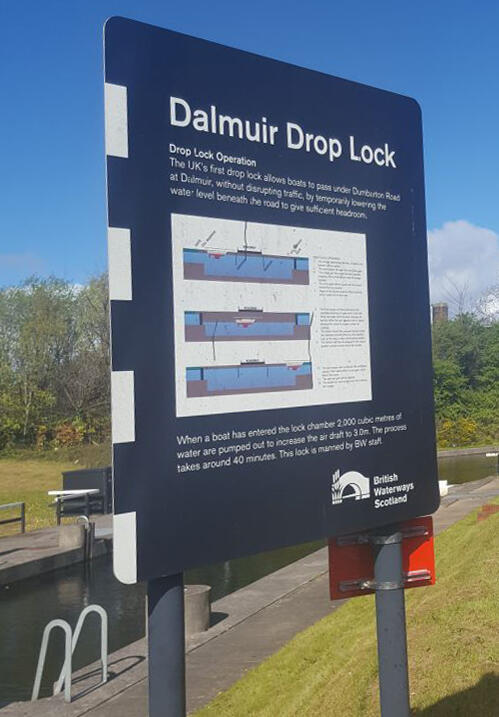
A drop lock allows a short length of canal to be lowered temporarily while a boat passes under an obstruction such as a low bridge. During canal restoration, a drop lock may be used where it is impractical or prohibitively expensive to remove or raise a structure that was built after the canal was closed (and where re-routing the canal is not possible).
A drop lock can consist of two conventional lock chambers leading to a sump pound, or a single long chamber incorporating the sump – although the term properly applies only to the second case. As the pounds at either end of the structure are at the same height, the lock can only be emptied either by allowing water to run to waste from the sump to a lower stream or drain, or (less wastefully) by pumping water back up to the canal. Particularly in the two-chamber type, there would be a need for a bypass culvert, to allow water to move along the interrupted pound and so supply locks further down the canal. In the case of the single-chamber type, this can be achieved by keeping the lock full and leaving the gates open while not in use.
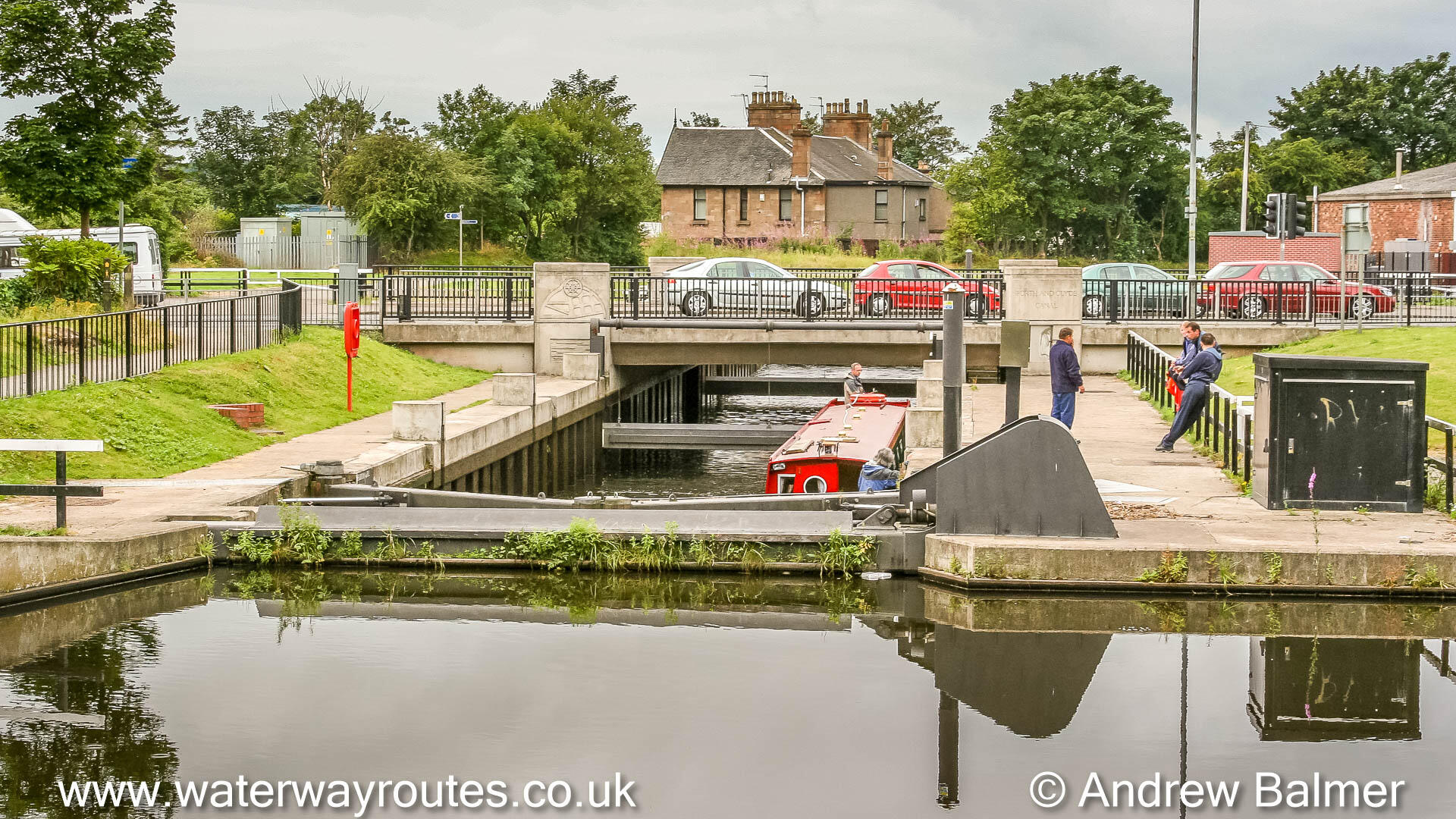
While the concept has been suggested in a number of cases, the only example in the world of a drop lock that has actually been constructed is at Dalmuir on the Forth and Clyde Canal in Scotland. This lock, of the single chamber type, was incorporated during the restoration of the canal, to allow the replacement of a swing bridge (on a busy A road) by a fixed bridge, and so answer criticisms that the restoration of the canal would cause frequent interruptions of the heavy road traffic. It can be emptied by pumping – but as this uses a lot of electricity the method used when water supplies are adequate is to drain the lock to a nearby burn
The swing bridge which was formerly on this site was a source of constant delays. When the canal was re-opened as a Millennium Project and with the aid of Lottery money, the opportunity was seized to do something quite ingenious. The bridge gives a clearance of only 20 inches, but gates are provided each side of the bridge to impound about 500,000 gallons of water.
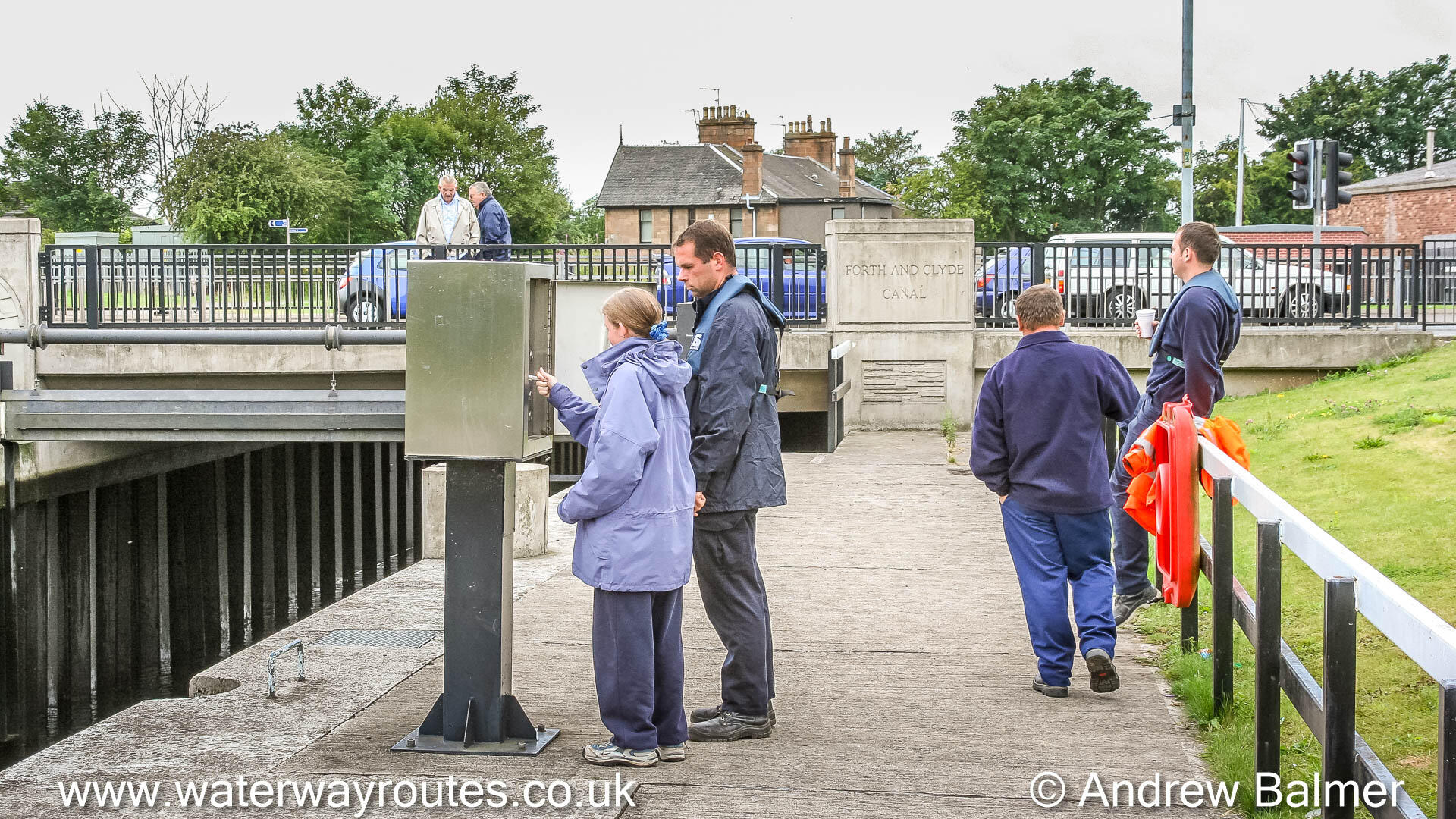
Once the boat has entered the lock and the gates have been closed, the water is pumped out to give up to 10 feet of clearance. The boat then moves forward under the bridge and the water allowed back in before the exit gates are opened, allowing the boat to depart.
A crew member is allowed to push the buttons on the control panel under the supervision of one of the Scottish Canals staff.
Photos credits: Andrew Balmer www.waterwayroutes.co.uk Google Streetmap John Yellowlees
Just north of Dumbarton Road, opposite road to Golden Jubilee Hospital. Nearest station is Dalmuir, up Duntocher Road