Horton Light Railway

Unique asylum railway
Region:
Red Wheel Site:
Transport Mode(s):
Address:
Horton Country Park, Horton Lane, Epsom, Surrey KT19 8PL
Postcode:
Visitor Centre:
Website:
Visit website
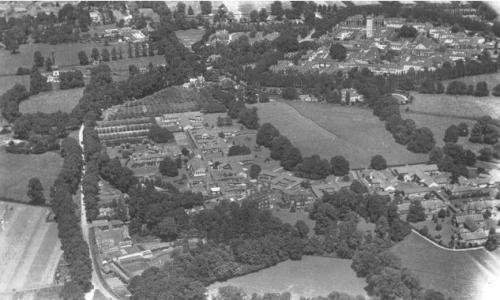
In 1889 the London County Council needed land to build further asylums for London's mentally ill and acquired the 1,000 acre Horton Estate for £40,000, converting the Manor House to a hospital. In 1903 the LCC commissioned the construction of a new hospital, Long Grove Asylum, to be built on Horton Lane at Ewell as an annexe to Manor Hospital and the nearly completed St Ebba's Epileptic Colony. It was an exact replica of Bexley Asylum, with a 2,000 bed capacity. The builder of the foundations, Charles Wall Ltd, found the transportation of materials to the site problematical, even after adding traction engines to a team of horses and carts, and considerable damage was caused to local roads.
In December 1904, Forster & Dicksee of London and Rugby gained the contract for the construction of the superstructure of the hospital, with a June 1907 deadline for completion. With the difficulties experienced by the previous contractors in mind, they applied to the Board of Trade for permission to build a standard gauge light railway from the L.S.W.R. station at Ewell West up to the site, crossing the Epsom to Ewell bridle path and the Hook Road on the level. After two months of negotiations, the London County Council, Epson Rural District Council, Epson Urban District Council and the Iwell Parish Council approved construction of the railway.
Progress with the railway was quick, with the first train-load of bricks and cement reaching the site on 20th April 1905. Hauled by a Manning Wardle 0ˆ’6ˆ’0 saddle tank named 'Hollymoor', she would await a summons by telephone from the L.S.W.R. at Ewell West after the arrival of a special goods train carrying materials. The arrival of a newly built Barclay 0ˆ’4ˆ’0 saddle tank 'Crossness' necessitated protection of the single line and a staff system was introduced.
Construction required workers and nine hundred travelled daily from Waterloo to Ewell West. While the bricks and cement were hauled by ‘˜Forster & Dicksee’s Railway‘s, the workers were forced to walk the 4km (2.5 miles) to the site, as passengers were never officially carried on the line. Despite a series of accidents, including the running over of an elderly lady at the Hook Road crossing and the collapse of a steam crane, the contract was completed ahead of schedule. The fifth hospital in the cluster, West Park, was completed in 1916.
'Hollymoor' was sold to the Austin Motor Co early in 1907, with 'Crossness' now ferrying medical equipment and supplies. The LCC began operation of the hospital in 1909 and took over the railway for carrying coal for the heating system. After the rails were reˆ’aligned to the east of the first site and the line fenced off, the LCC applied for permission to extend the railway to serve the Horton and Manor hospitals. As the Board of Trade would only agree if the proposed lines were constructed in an expensive tunnel under Horton Lane, the plan was dropped.
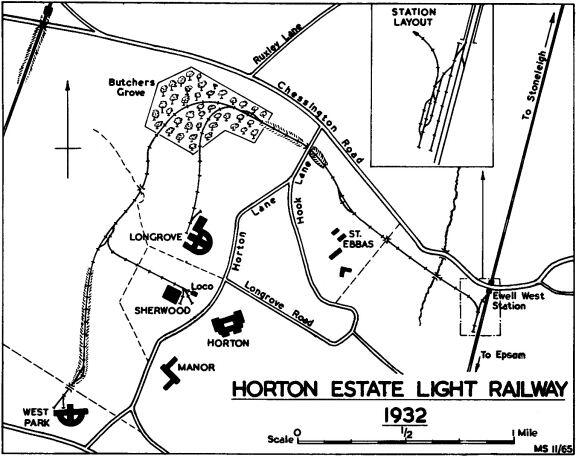
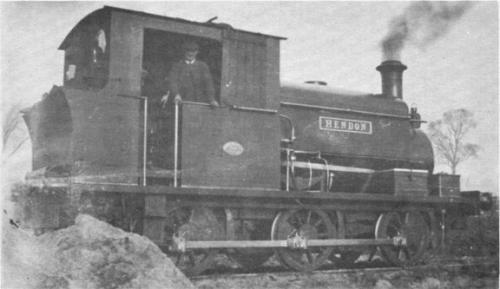
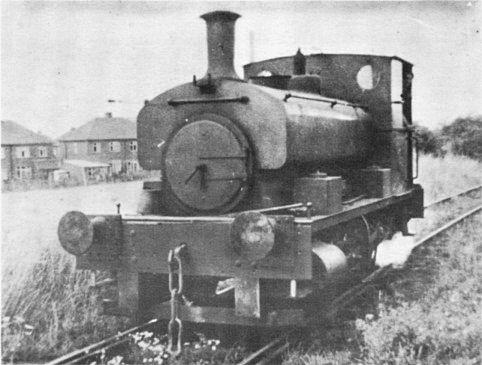
In 1918, the LCC awarded a contract for the construction of another new hospital at West Park, extending the railway to carry materials both to West Park and to Sherwood, where a central power station and a locomotive shed were to be built. The new extension had a gradient of about 1 in 40 for 0.8km (0.5 miles), which progressively wore out 'Crossness'; a Manning Wardle 0ˆ’6ˆ’0 saddle tank 'Hendon' replaced her in 1935. 'Sherwood', an 0ˆ’4ˆ’0 saddle tank, arrived in 1947 to work the now infrequent trains for the remainder of the railway’s existence. After 45 years of operation, the line was closed in January 1950 and the track lifted for re-use in South America.
West Park Hospital was the last of the cluster to remain in operational use, with traces of the railway remaining around the central engineering block. It was closed in 1996 and demolished in 2011. The track routes can still be followed as walking and riding paths in Horton Country Park.
By road: On B280, Horton Lane
By rail: Epsom Station is approx 7 km (4.5 miles) away
Body, Geoffrey, Light Railway and Vintage Transport Guide 1972, David & Charles, ISBN-10: 0715354884 (1972)
Burton, Anthony & Scott-Morgan, John, Britain's Light Railways, Moorland Publishing, ISBN-10: 0861901460 (1985)
Casserley, H. C., Light Railways of Britain: Standard Gauge and Narrow Gauge, DB Barton, ISBN-10: 0851533213 (1978)
Davies, W. J. K., Light Railways of the First World War: History of Tactical Rail Communications on the British Fronts, 1914-18, David & Charles, ISBN-10: 0715341081 (1967)
Leleux, Sydney, The Leighton Buzzard Light Railway, The Oakwood Press, ISBN-10: 0853614601 (1996)
Ransome-Wallis, Patrick, World's smallest public railway - The Romney,Hythe and Dymchurch Light Railway, Ian Allan, ASIN: B0000CO7V5 (1968)
Smith, Martin, Britain's Light Railways, Ian Allan, ISBN-10: 0711022232 (1994)
Scott-Morgan, John, British Independent Light Railways, David & Charles, ISBN-10: 071537933X (1980)
White, J. W., Light Railways (1895), Kessinger Publishing, ISBN-10: 1166578577 (2010)
Abandoned Britain - West Park Hospital
County Asylums - Long Grove
Derelict Places - Long Grove Hospital
The Industrial Railway Record - Horton Light Railway
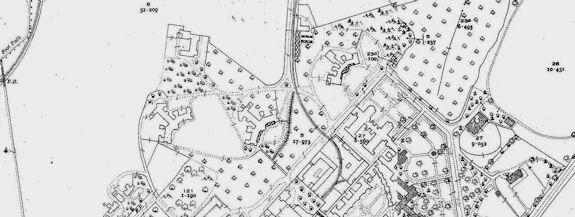
Ordnance Survey - Long Grove Mental Hospital showing rail tracks (c.1935)

Ordnance Survey - West Park Mental Hospital showing rail tracks (c.1935)

Time Chamber - The Horton Estate Epsom Cluster
You Tube - West Park Asylum