
Manx Electric Railway
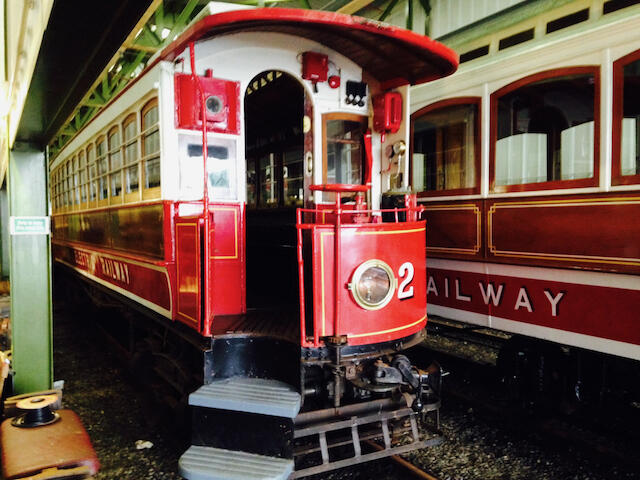
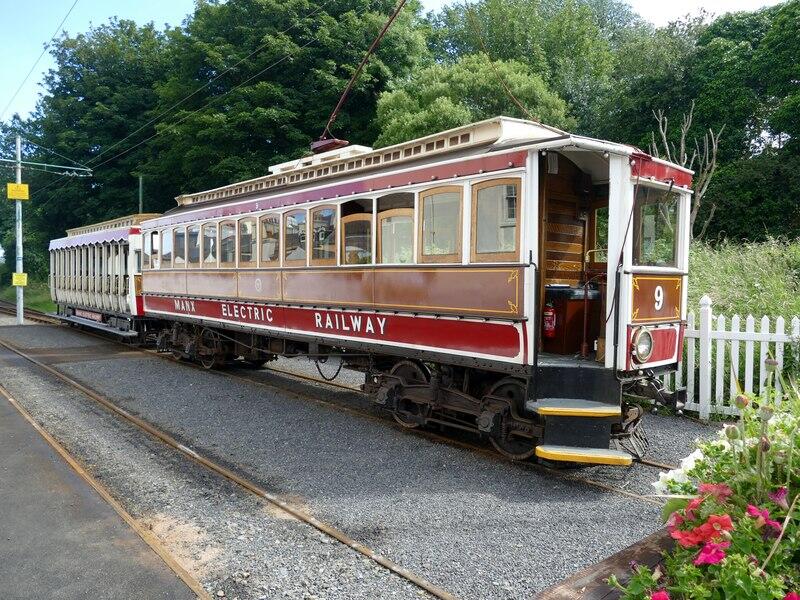
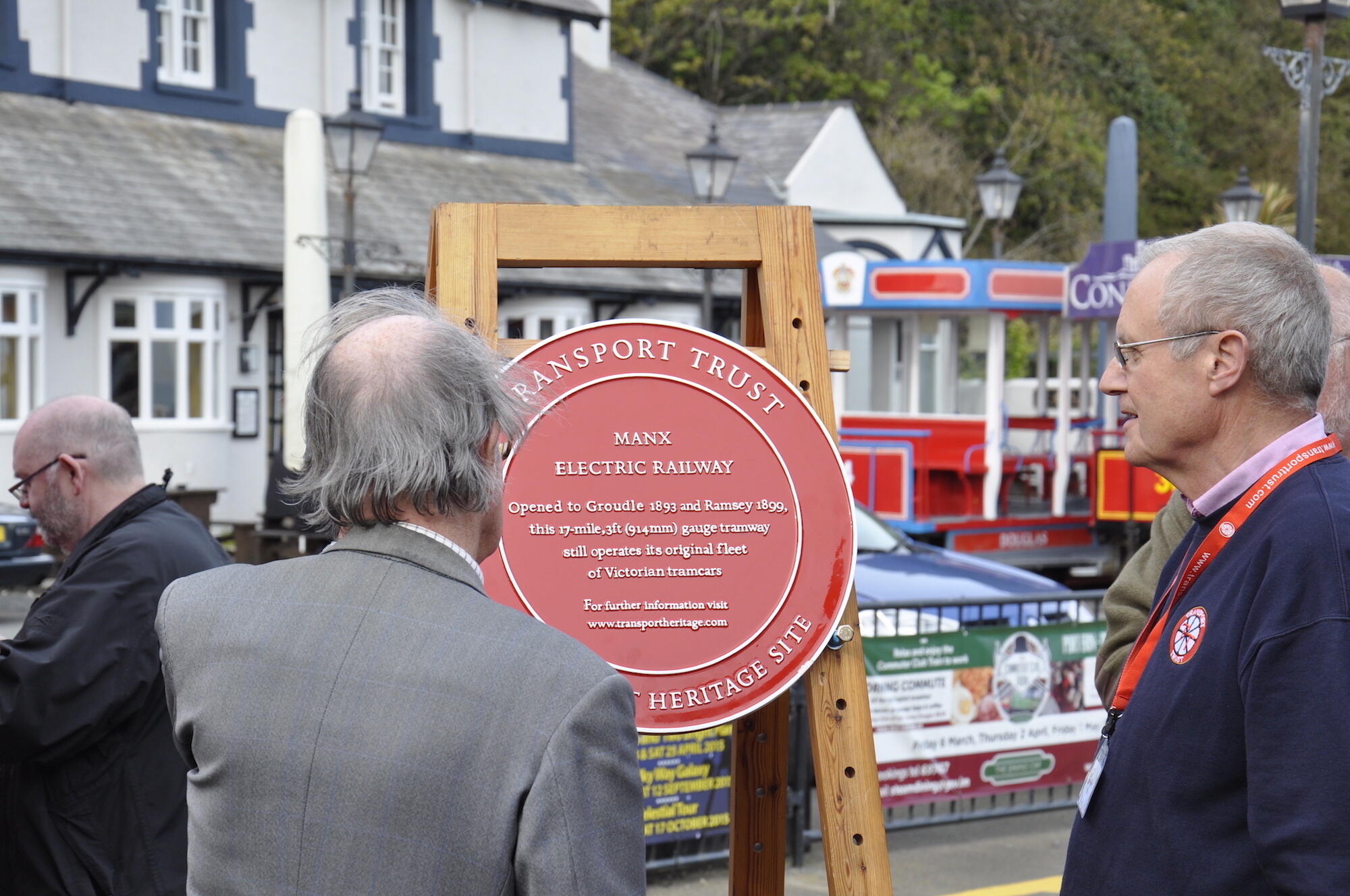
Opened to Groudle 1893 and Ramsey 1899 this 17-mile 3ft (914mm) gauge tramway still operates its original fleet of Victorian tramcars.
Region:
Red Wheel Site:
Transport Mode(s):
Address:
Derby Castle
The Promenade,
Douglas
Isle of Man
IM99 1JS
Postcode:
Visitor Centre:
Website:
Visit websiteOpened to Groudle 1893 and Ramsey 1899 this 17-mile 3ft (914mm) gauge tramway still operates its original fleet of Victorian tramcars.
The Manx Electric Railway was built by Alexander Bruce, a banker, Frederick Saunderson, a civil engineer and Alfred Jones Lusty, a land owner, who formed the Douglas Bay Estate company to develop land north of Douglas.
Construction started in 1893 with the line from a depot at Derby Castle Depôt in Douglas to Groudle Glen and regular public services started on 7 September 1893.
Anticipating the second stage of the railway was the extension from Groudle to Laxey, the company was known as the Douglas and Laxey Coast Electric Tramway Company. Construction of this next stage started in February 1894. It was formally opened on 28 July of the same year. The name was temporary, as further expansion was planned, and it became known as the Isle of Man Tramways and Electric Power Company.
An extension to Ramsey was approved in May 1897. The line from Laxey to Ramsey opened on 2 August 1898 by the Lieutenant Governor, John Henniker-Major, 5th Baron Henniker. At that date the line ran as far as Ballure, on the outskirts of Ramsey. The final extension to the centre of Ramsey was opened on 24 July 1899.
The construction of such a lengthy line in a short period of time had stretched the company's finances, and it was £150,000 in debt. The owning bank foreclosed on the loan and as a consequence Dumbell's Bank failed.The company was liquidated. In 1902 the assets were purchased by Herbert Kidson on behalf of a syndicate of businessmen from Manchester, and the Manx Electric Railway company was born. The sale, which included the Snaefell Mountain Railway, was for £252,000 (equivalent to £27,560,000 in 2019).
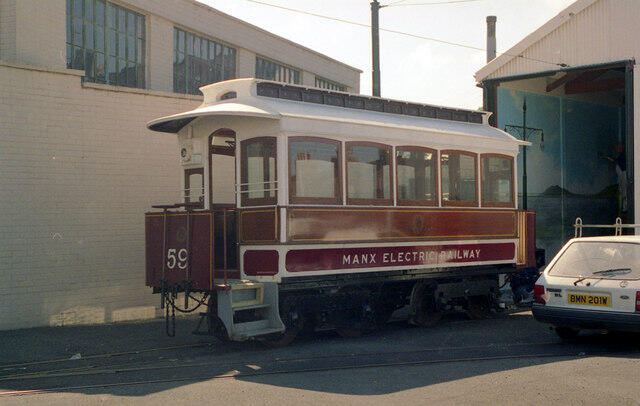
On 2 August 1902 King Edward VII and Queen Alexandra travelled from Douglas to Ramsey in enclosed trailer No. 59.
In 1917 the refreshment room at Laxey was destroyed by fire. Fire caused more damage at Laxey in 1930, when the car shed was destroyed, along with four cars, seven trailers, three tower wagons and an open wagon. The car shed was later rebuilt.
After the Second World War, the railway struggled financially, and in 1957 it was nationalised at a cost of £50,000 (equivalent to £1,214,400 in 2019). A nationalisation livery of green and white was applied to some trams and trailers for a limited time, though this was unpopular and later dropped. A government Board was formed to manage the line and the Snaefell Mountain Railway (and still does so after various changes of title from the original "Manx Electric Railway Board" to "Isle of Man Passenger Transport Board", and now Isle of Man Heritage Railways (the word "heritage" was added in 2009). This is a division of the Department of Infrastructure of the Isle of Man Government, which also operates the island's buses as Bus Vannin.
The government invested heavily in the railway starting in 1957, initiating a rail replacement programme between Derby Castle and Laxey at a cost of £25,000 per year for 10 years. The Laxey to Ramsey section was continually under threat; in 1975 the railway lost the mail contract, and services from Laxey to Ramsey were suspended. After public protest, services through to Ramsey restarted in 1977.
The section between Laxey Station and Ramsey was closed again in summer 2008, after a consultancy report commissioned by the Isle of Man Government exposed critical failings in the permanent way, deeming it unsuitable for passenger service in the near future. The island's parliament, Tynwald, agreed to spend nearly £5 million for track replacement in July–September, allowing trams to run on a single track, according to a news report. Manx authorities were considering vintage buses as a replacement during the closure, reports previously stated. The resignation of the Tourism and Leisure Minister Adrian Earnshaw was called for by enthusiasts, and Chief Minister Tony Brown ordered an urgent review of the closure decision. He also ordered an independent inquiry into how the track had been allowed to get into such a state. In 2009 the full line operated continuously, and it has continued to do so since the beginning of the 2010 season at Easter, with no rail-related incidents affecting services. Until 1998 the line operated a year-round service, but since then it has run seasonally, usually between March and the beginning of November, though the dates can vary from season to season.
Entry from Wikipedia - with thanks
Photos: Graham Hogg under this Creative Commons Licence.
Dr Neil Clifton under this Creative Commons Licence.
Alan Murray-Rust under this Creative Commons Licence.
Goodwyn, A.M. (1976) Is This Any Way To Run A Railway? - The story of the Manx Electric Railway since 1956., Manx Electric Railway Society website,
Goodwyn, M., (1993) Manx Electric, Platform 5 Publishing, ISBN 1-872524-52-4
Heavyside, Tom (2010). Douglas – Laxey – Ramsey: including the Groudle Glen Railway. Narrow Gauge Branch Lines series. Midhurst, West Sussex, UK: Middleton Press. ISBN 9781906008758.
Hendry, R., (1993), Rails in the Isle of Man: A colour celebration, Midland Publishing Limited, ISBN 1-85780-009-5