
Standedge Tunnel

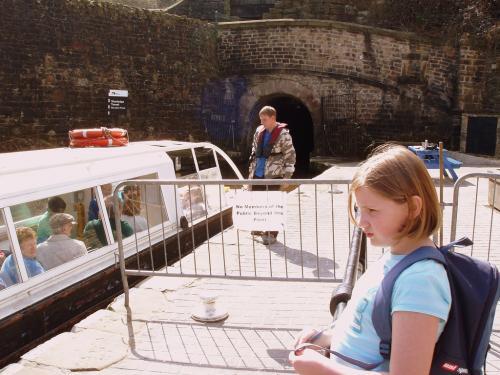
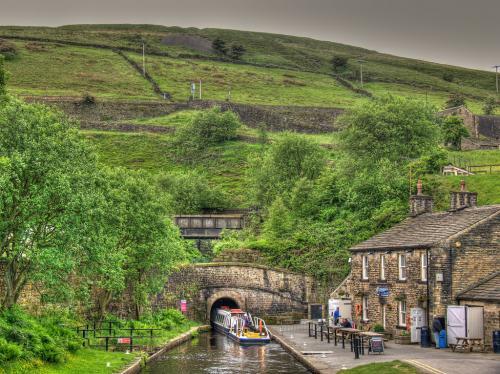
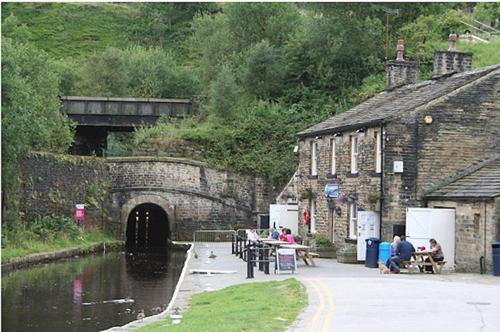
At 5.2 km this is the longest and highest canal tunnel in Britain and took sixteen years to complete.
Region:
Red Wheel Site:
Transport Mode(s):
Address:
Standedge Tunnel & Visitor Centre, Waters Road, Marsden, Huddersfield
Postcode:
Visitor Centre:
Opening Times:
Opening times for Visitor Centre vary. See website.
Website:
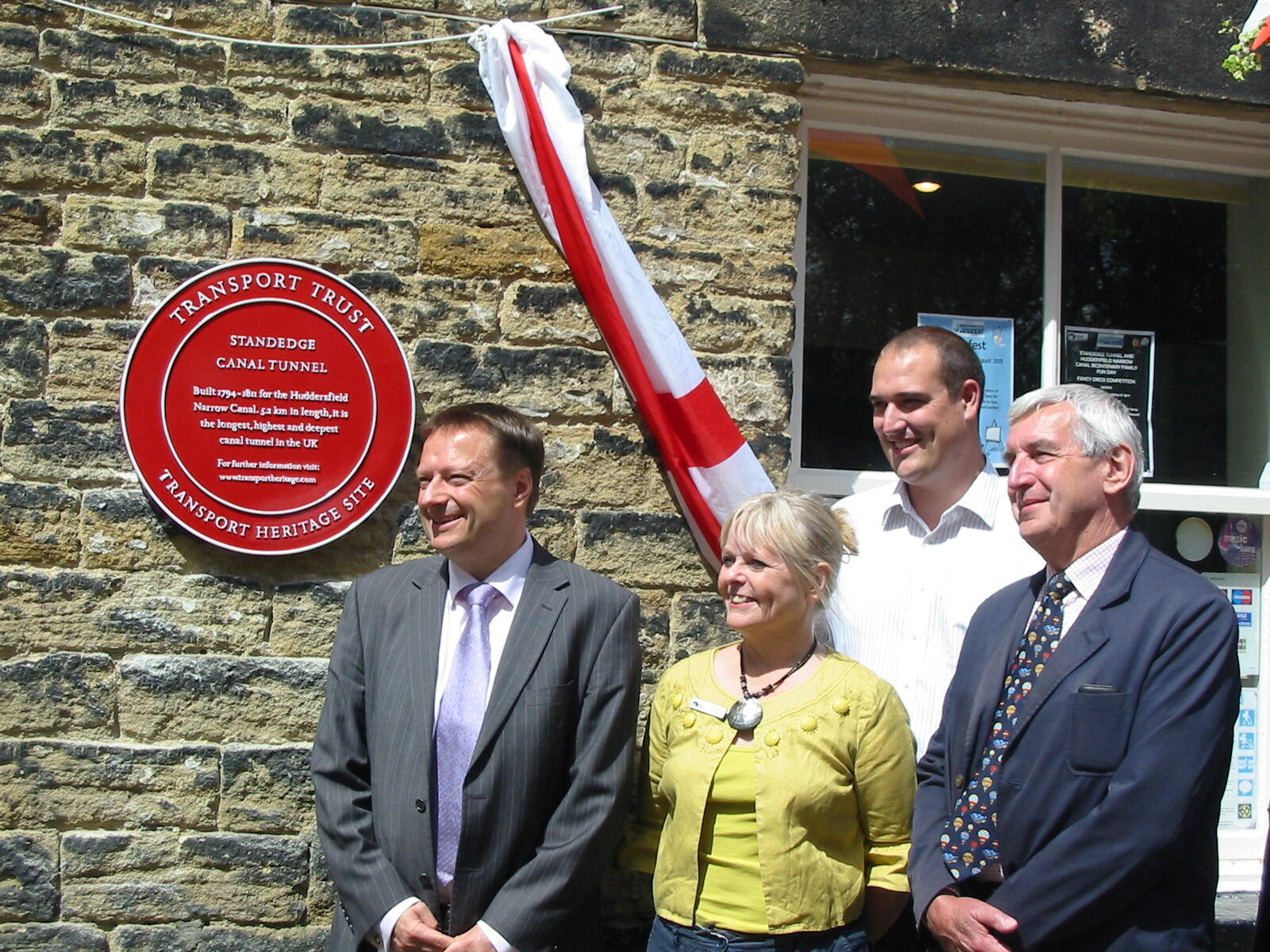
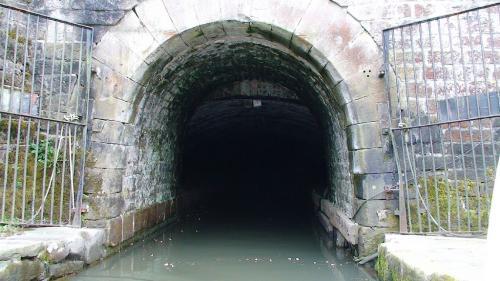
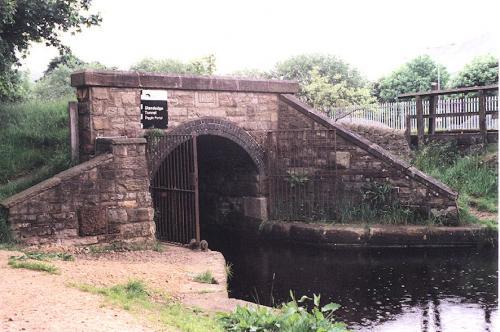
Visit websiteBuilt 1794-1811 for the Huddersfield Narrow Canal, 5.2 km in length, it is the longest, highest and deepest canal tunnel in the UK
Benjamin Outram was the consulting engineer for the construction of the Huddersfield Narrow Canal (then known as the Huddersfield Canal), which links the towns of Ashton-under-Lyne and Huddersfield through the tunnel. However, Outram had so many commitments that construction took place under the supervision of a young and inexperienced surveyor, Nicholas Brown.
Layout of the tunnel was difficult. It was necessary to lay out a straight line across the mountain top and calculate how deep below the canal would be. At intervals, pits would be sunk to the requisite depth and the tunnel dug outwards from their bases. In addition it was necessary to drive drainage adits. Outram had given his opinion that the hill was composed of gritstone and strong shale and should not present any difficulties. In fact he had not expected the need for a lining. It was an extremely ambitious undertaking for the time and Outram was not yet an established engineer, though he had gained experience with the Butterley Tunnel on the Cromford Canal. Nevertheless more than the expected amount of water entered the workings.
The adits allowed so-called 'water engines' to be used. These were simply two buckets on a rope which ran over a pulley at the top of the shaft. One bucket would be filled with spoil from the workings and the other would be filled with water which counterbalance the spoil causing it to rise to the top. Once unloaded, the water would be drained allowing the spoil bucket to fall for another load. Although steam engine pumps were tried, they proved inefficient and expensive to run. A further problem was maintaining an adequate air supply for the workers. This was achieved by injecting water in a fine spray at the top of the shaft, which would carry sufficient fresh air down with it.
Work on the tunnel was fraught with difficulty and progress was slow. Gunpowder was used to blast through the solid rock and the work took place by candlelight. In about 1801, Outram resigned from his post in order to devote himself entirely to work at his own company which was expanding rapidly. Following his resignation, Thomas Telford was called in to advise on the tunnel's completion. Before completion, a severe misalignment was found in the tunnel due to inaccuracy on the part of the surveyor who originally laid it out. The tunnel was finally pierced through in 1809.
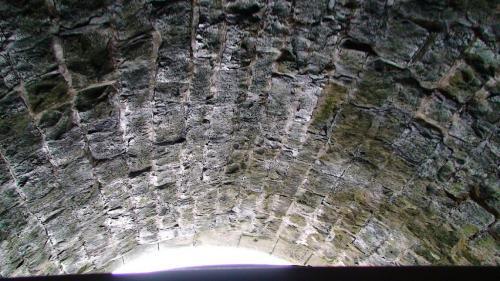
The canal tunnel was brick-lined in places, though bare rock was left exposed in others.
The tunnel eventually opened in 1811, and the canal then became a through route 13 years after the rest of it had been completed and 17 years after work first began, at a cost of £123,803.
The canal tunnel is only wide enough for one narrowboat for much of its length, and to save on cost, as in some other canal tunnels in England, no tow-path was provided in the tunnel. As canal boats were horse-drawn, the boats had to be legged through the tunnel. There are several widened points in the tunnel, originally designed to be passing places. However, due to intense competition between boat crews, two-way operation in the tunnel was found to be impractical. The canal company introduced a new method of working where one end of the tunnel was closed off by a locked chain, preventing access to the tunnel unless authorised. A similar system is used today.
The Huddersfield Narrow Canal was purchased by the former Huddersfield and Manchester Railway in 1846. The canal tunnel proved most beneficial in assisting with the construction of the first railway tunnel at this location, as no vertical shafts were needed in the construction and the canal was an easy way to help remove the large amount of spoil excavated. Several cross-passages were retained.
The last commercial boat to use the tunnel passed through in 1921, and the canal was officially closed in 1944, after which it soon fell into disrepair. One boat managed to struggle from one end of the canal to the other in 1948, but this soon became impracticable as the canal was blocked at several locations on both sides of the Pennines.
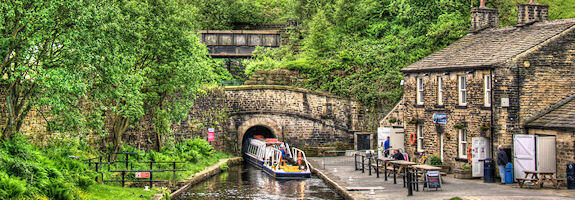
The canal tunnel was the beneficiary of a £5 million restoration project as part of an effort to re-open the entire canal. It re-opened in May 2001. Most modern canal boats are diesel-powered. When the canal was reopened it was felt that it would not be safe for boaters to navigate the tunnel under their own diesel power, due to the extreme length of the tunnel and the lack of ventilation. Instead, electric tug boats are used to haul narrowboats through the tunnel.


By road: Off A62, through the village of Marsden, 10 km west of Huddersfield.
By Boat: On the canal.
Atterbury, Paul. English Rivers and Canals. ISBN. 0 297 78318 1 (1984)
Bartholomew. Nicholson Inland Waterways Map of Great Britain. ISBN 978-00072 11173. (2006)
Boughey, Joseph. Hadfield's British Canals: the Inland Waterways of Britain and Ireland.
ISBN 978 18401 50247. (1998)
Boughey, J. and Hadfield, C. British Canals: A Standard History . ISBN 978-07524 46677. (2008)
Burton, A. The Waterways of Britain. ISBN 0 00 218047 2 (1983)
Gibson, K. Pennine Dreams: History of the Huddersfield Canal (2003)
Gladwin, D.D. A Pictorial History of Canals. ISBN 0 7134 0554 6 (1977)
Hadfield, C. Canals of Yorkshire and North East England (1973)
Lower, J. South Pennine Ring (1998)
Pratt, D. Waterways Past and Present: A Unique Record of Britain's Waterways Heritage. ISBN 978-07136 76341. (2006)
Pratt, F. Canal Architecture in Britain. ISBN 978- 09032 18139. (1976)
Roberts, B. Britain's Waterways: A Unique Insight. ISBN 978- 08635 11158. (2006)
Rolt, L.T.C. Inland Waterways of England. (1950)